Behind the EAS™ standard lie two decades of methodological work, scientific research, and practical implementation at the state level. In this section, you will find the sources and key milestones that formed the basis of our modern professionalism.
Want to look behind the scenes and see the foundation from which today's EAS™ grew? Just turn the key, and then a history recorded in SPECIAL documents and facts will unfold before you. It is a long and successful journey that proves: EAS™ is far from just a modern marketing product.
It is a fundamental expert system of international level, shaped by real experience and capable of solving the most complex challenges of modern times in the most comfortable way for you.


BACKGROUND & ARCHIVE


Welcome to our expertise archive
2002–2003 | STATE CONTROL ARCHITECTURE: from Regulation to Strategy
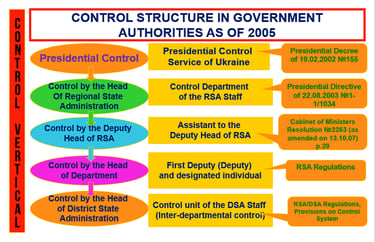
The period of the early 2000s, influenced by European and global practices, became a stage of fundamental transformation of the state administration system in Ukraine. These changes particularly affected control as an effective instrument designed to regulate the process of fulfilling tasks set by the Government at the local level with a focus on a concrete result.
During this time, a radical shift occurred: from legacy formal record-keeping to a modern control system and the creation of an organic vertical of executive authorities and local self-government bodies to ensure impeccable executive discipline.
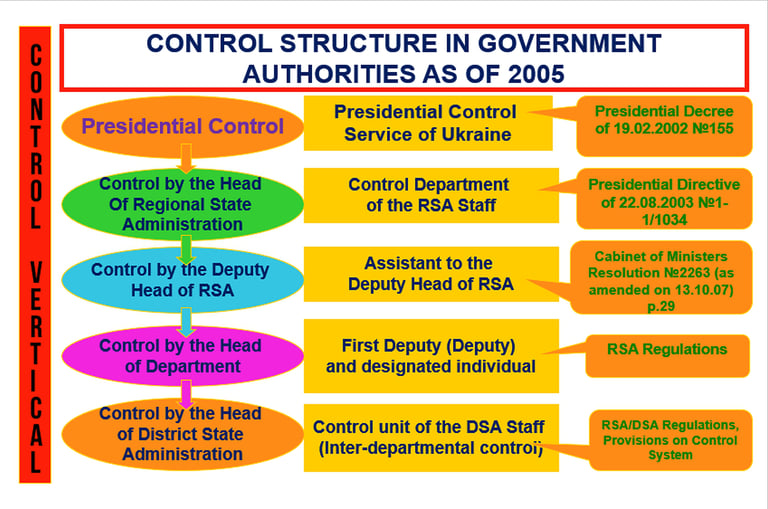
A key stage of the reform was the placement of control units under the direct subordination of the heads of regional state administrations and functional interaction with the Secretariat of the President of Ukraine.
PROCESS OF ESTABLISHMENT: Reforms in Action
PROFESSIONAL INTEGRITY: Expertise and Responsibility beyond Political Conjuncture
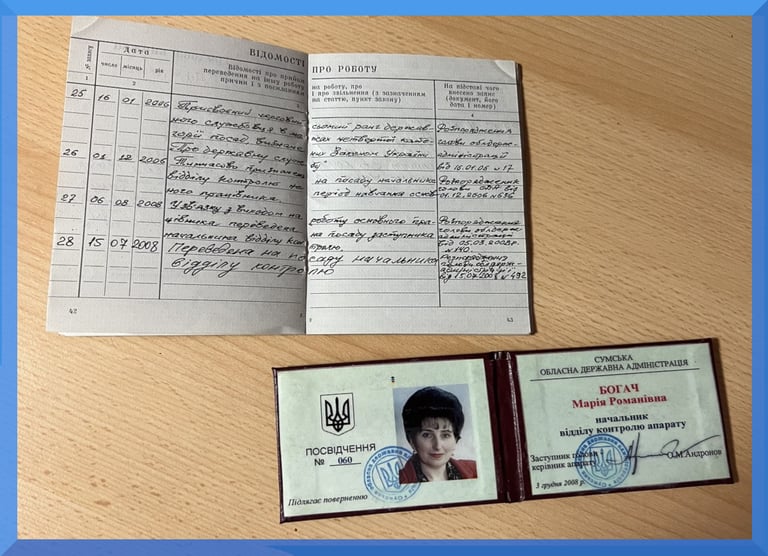
The beginning of the EAS™ founder's activity in the state sector coincided with a period of radical restructuring of the power vertical in Ukraine, making her a direct active participant in the development of the new control system.
8 subsequent years in the position of Head of the specialized department (7th rank, IV category of civil service) and responsibility for the implementation of new standards at the regional level represent a path of principled formation, where the professional standard stood above the struggle for mandates.
Indeed, during the period of 2002–2009, the leadership of the regional administration changed 8 times. Despite political turbulence and constant shifts in vectors, the Founder, within her powers, ensured the continuity of control processes and the stability of executive discipline. This became the ultimate test of professional integrity.
This experience of "institutional resilience" formed the foundation of the future EAS™ methodology, where process quality is an immutable constant regardless of external circumstances, namely:
Scalability: "Thousands of acts of the President and the Government, forming the development strategy of an entire region, were under direct control."
Innovation: "Transition from paper-based record-keeping to the first systems of operational electronic monitoring."
Methodological Leadership: "Development of unified control regulations, norms, and strategies that became the standard for all structural units of the region."
Professional Independence: "Ability to maintain the effectiveness of the management system under conditions of critical personnel rotation in the top leadership."


DIGITAL CHRONICLES AND FACTS: Archive Documents for 2002–2003
ARCHIVE NOTE: Documents from various periods have been digitized and are stored in the database as originals in their language of issuance. For ease of navigation, the document list is presented in the language of the website interface. Detailed historical context and instructions for content translation can be found on the individual page of each document.
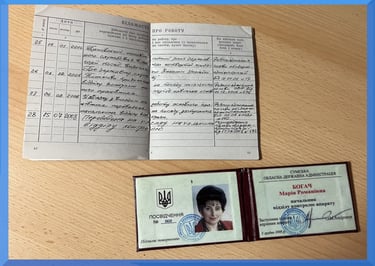


Decree of the President of Ukraine dated 29.03.2000 No. 549/2000 "On measures to improve the organization of control over the execution of acts and instructions of the President of Ukraine."
Resolution of the Cabinet of Ministers of Ukraine dated 21.08.2000 No. 1290 "On approval of the Model Regulation on the control department of the regional state administration staff."
Analytical report on the status of execution of Decree No. 549 and the implementation of the "feedback" system (February 2002).
Decree of the President of Ukraine dated 19.02.2002 No. 155/2002 "On the procedure for organizing and exercising control over the execution of decrees, orders, and instructions of the President of Ukraine."
Report of the control department to the Board "On the status of execution of regulatory documents and executive discipline" (January-September 2002).
Letter from the Main Control Department of the Administration of the President of Ukraine dated 15.07.2003 No. 14-08/309 regarding participation in a methodological seminar.
Report of the control department to the Main Control Department of the Administration of the President of Ukraine "On the system of control organization in the region" (June 2003, prepared for the MCD seminar).
Order of the Head of the Regional State Administration dated 29.05.2003 No. 238 "On the status of executive discipline and measures to strengthen control."
Resolution of the Cabinet of Ministers of Ukraine dated 17.12.2003 No. 1967 "On amendments to the Model Regulation on the control department" (regarding direct subordination to the heads of regional state administrations).
Order of the Head of the Regional State Administration dated 22.09.2003 No. 414 "On the change of subordination of the control department."
2004–2005 | CONTROL AS A VECTOR OF A NEW ERA: from methodology to action
The year of transition from fragmented management decisions to a unified high-quality methodology. Control has transformed from a monitoring tool into a professional intellectual service.
Methodological Unification: Development of a system of codified regulations that ensured a unified standard of task execution from the highest authority to the lowest level of the management hierarchy.
Scaling of Competencies: Implementation of a continuous training system and "Control Days," which ensured system autonomy based on clear algorithms and rapid operational feedback.
TRANSFORMATION PROCESS: Crystallization of Standards
INSTITUTIONAL STABILITY:
Protection of Professional Logic
A period when the established methodology proved its autonomy and viability under conditions of radical political and structural transformations of the state apparatus.
System Stability: Successful resistance to attempts to abolish control structures. It has been proven that clearly defined methodological algorithms are more stable than personnel rotations and ensure the preservation of functionality regardless of external changes.
Analytical Transition: Rejection of "paper bureaucracy" in favor of electronic monitoring algorithms. Priority is set on the automation of technical processes to release intellectual human resources for deep expertise and forecasting.
In this way, for the first time in the regional executive authorities, new tools and work principles were introduced, and important basic components of process standardization were structured.
Implementation of the "E-Government" automated system.
Clear alignment of authorities (in accordance with ISO 9001:2000 – processes, services) within each structure and between structures.
Continuous improvement of the task execution system and the process of control over executive discipline. (Order of control organization).

DIGITAL CHRONICLES AND FACTS: Archive Documents for 2002–2003
ARCHIVE NOTE: Documents from various periods have been digitized and are stored in the database as originals in their language of issuance. For ease of navigation, the document list is presented in the language of the website interface. Detailed historical context and instructions for content translation can be found on the individual page of each document.


BLOCK 2004: Methodological Breakthrough
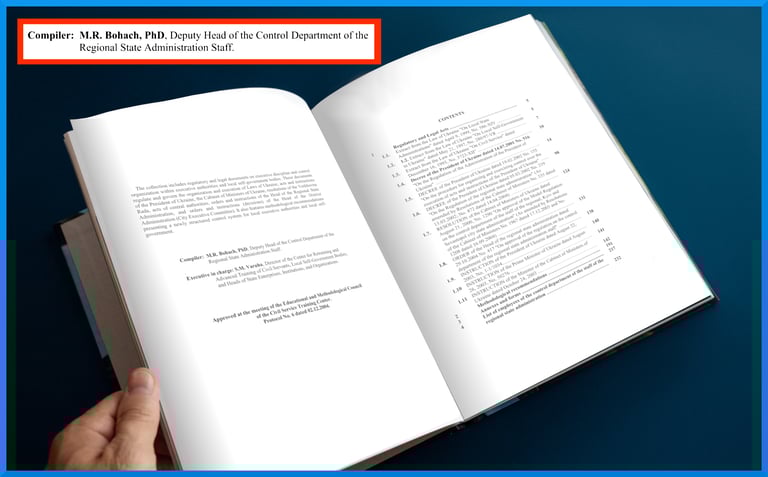
Author's Collection: "Compendium of Legal Documents and Methodological Recommendations" (Issue 1, 2nd edition, 2004), 225 p.
Cover letter and abstracts for the Cabinet of Ministers Conference (June 2004) "Discipline and Control in Executive Authorities."
Governor's Order No. 76 (02.03.2004): On executive discipline and introduction of disciplinary liability.
Government Resolution No. 1208 (16.09.2004): Amendments to the Model Regulation on Control Units.
Governor's Order No. 417 (29.10.2004): New Regulation on the RSA Staff Control Department.
Official Telegram (Electronogram) No. 14-1-3 (12.12.2004): Final meeting of regional control heads.
BLOCK 2005: System Protection and Analytics
Presidential Decree No. 1132 (26.07.2005): Control over execution of Presidential acts (with working resolutions).
Prime Minister's Directive No. 40297/1/1-05 (29.07.2005): On strict implementation of the new Decree on Control.
RSA Report No. 01-12/4609 (29.08.2005): Socio-economic development tasks and new control methodologies.
Governor's Directive No. 40297/38/1-05 (09.09.2005): On preservation and strengthening of control units.
Governor's Directive No. 42 (26.09.2005): Measures to strengthen discipline and activate e-document flow.
RSA Report No. 01-12/5675 (07.10.2005): Expansion of control staff to 8 members and functional modernization.
Internal Memo No. 02-5612/01-12 (11.10.2005): Violation of Presidential requirements regarding autonomy of district control units.
RSA Report No. 01-12/5678 (15.10.2005): Implementation of Government directives (to the Secretariat of CMU).
Prime Minister's Directive No. 58950/1/1-05 (07.11.2005): Improving Government control over local administrations.
Analytical Report No. 01-12/6927 (22.11.2005): Reforming the monitoring system (for the Governor).
Analytical Report No. 01-12/6927-1 (22.11.2005): State of executive discipline in the region.
Final Performance Report for 2005 (as of 01.01.2006): Detailed system efficiency analysis for the Governor.
Activity Report No. 01-11/27-1 (15.01.2006): Results of control activities for the Presidential Administration.
2005 | THE FORMULA OF EXCELLENCE: from administrative standards to a global philosophy of quality
The year became a turning point — going beyond the limits of classical state administration. Direct integration into the professional community of quality leaders (EOQ, EFQM) allowed the transformation of the control function into the intellectual component of the Quality Management System (QMS). It was a conscious transition from oversight to building an Excellence Model, where control is merely a tool for process verification.
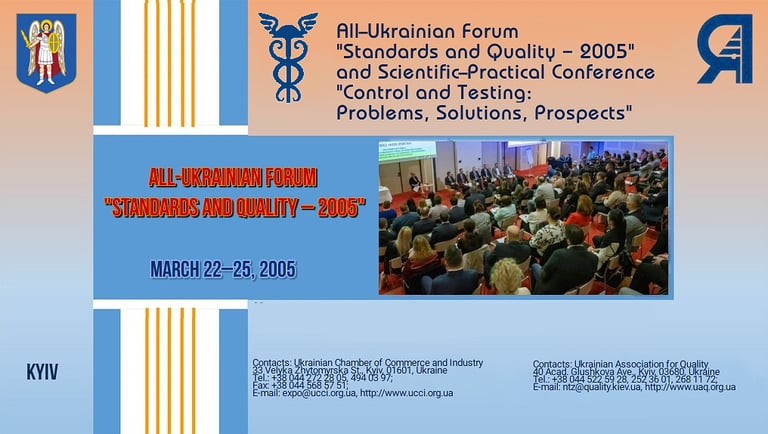
VERIFICATION IN THE ISO 9001 SYSTEM: All-Ukrainian Forum "Standards and Quality 2005"
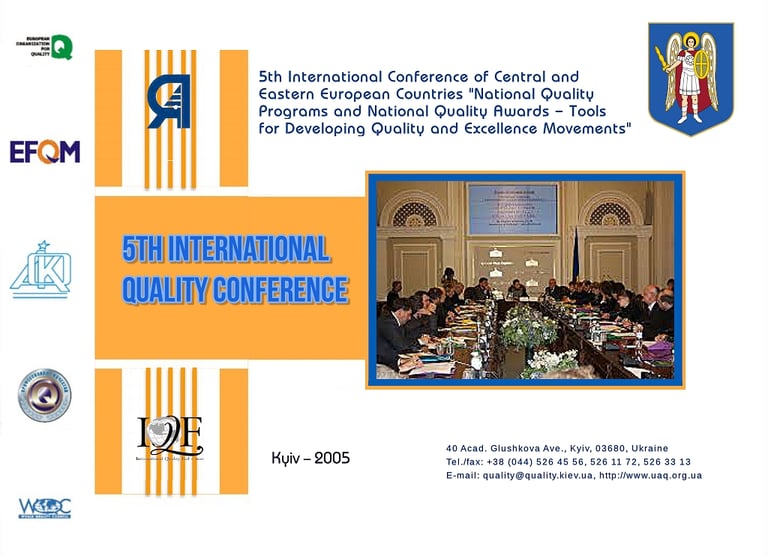
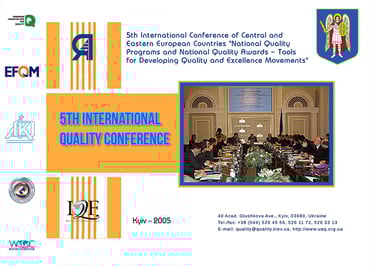
EUROPEAN PROJECTION OF EXCELLENCE: Participation in the 5th International Quality Conference
In late September 2005, the 5th International Conference of Central and Eastern European Countries "National Quality Programs and National Quality Awards – Tools for Developing Quality and Excellence Movements" was held in the capital of Ukraine.
ORGANIZERS: European Organization for Quality (EOQ) and the Ukrainian Association for Quality (UAQ) supported by the UN and the European Foundation for Quality Management (EFQM).
ESSENCE: Scaling the experience to the level of the EFQM Excellence Model through direct interaction with the international expert community.
EXPERT CASE: Formation of the architecture of management systems based on European standards. Direct communication with quality leaders from 20 countries allowed for the synchronization of local management processes with global management trends.
RESULT: Adoption of the Resolution on the harmonization of national programs with international ISO 9000 standards. This provided a powerful impetus for increasing the competitiveness of regional administration and the practical implementation of QMS.
DIGITAL CHRONICLES AND FACTS: Archive Documents for 2005
ARCHIVE NOTE: Documents from various periods have been digitized and are stored in the database as originals in their language of issuance. For ease of navigation, the document list is presented in the language of the website interface. Detailed historical context and instructions for content translation can be found on the individual page of each document.
All-Ukrainian Forum "Standards and Quality – 2005".
Invitation Letter: Official letter from the leadership of the Ukrainian Chamber of Commerce and Industry and the Ukrainian Association for Quality (UAQ) dated 05.03.2005 No. 358/05 to participate in the Forum.
Forum Program.
Travel Documentation: Mission orders for M.R. Bohach regarding participation in the Forum.
Abstracts of the Presentation: PhD M.R. Bohach at the scientific-practical conference "Control and Testing: Problems, Solutions, Prospects."
5th International Quality Conference.
Presidential Decree No. 1105/2005 (13.07.2005): "On measures to improve activities in the field of technical regulation and consumer policy."
Invitation Letter: Official letter from P.Ya. Kalyta to the Governor (Head of the RSA) dated 25.08.2005 No. 428/05 to participate in the 5th International Conference.
Travel Documentation: Mission orders for M.R. Bohach regarding participation in the Conference.
Publication: "The Ukrainian Path to European Excellence: Quality as a National Idea." Compendium of materials, Kyiv – 2006, compiled by P.Ya. Kalyta.
Conference Resolution: Resolution of the 5th International Conference of Central and Eastern European Countries "National Quality Programs and National Quality Awards – Tools for Developing Quality and Excellence Movements."
On March 22–25, 2005, the All-Ukrainian Forum "Standards and Quality – 2005" and the scientific-practical conference "Control and Testing: Problems, Solutions, Prospects" were held.
ORGANIZERS: Ukrainian Chamber of Commerce and Industry and the Ukrainian Association for Quality.
ESSENCE: Scientific and practical testing of the integration of existing management algorithms into the structure of the international ISO 9001 standard.
EXPERT CASE: Participation in the first scientific-practical conference "Control and Testing: Problems, Solutions, Prospects." Presentation of the methodology of "continuous monitoring" of control as a process within the overall quality system from a management perspective.
KEY FOCUS: Transition from detecting violations to preventing deviations at all stages of the management decision life cycle. The civil service receives a toolkit that ensures a level of efficiency inherent in global business.
2006 | WORLD-CLASS EXPERTISE: Learning from Quality Management Legend Tito Conti
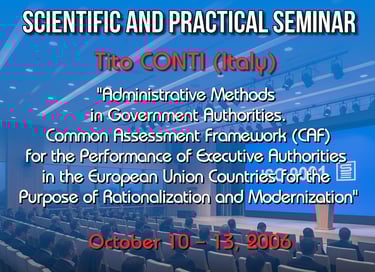
ESSENCE: Mastering the CAF (Common Assessment Framework) model — the European standard of excellence developed specifically for the public sector. This tool allows for a transition from error detection to the systematic rationalization of the state apparatus.
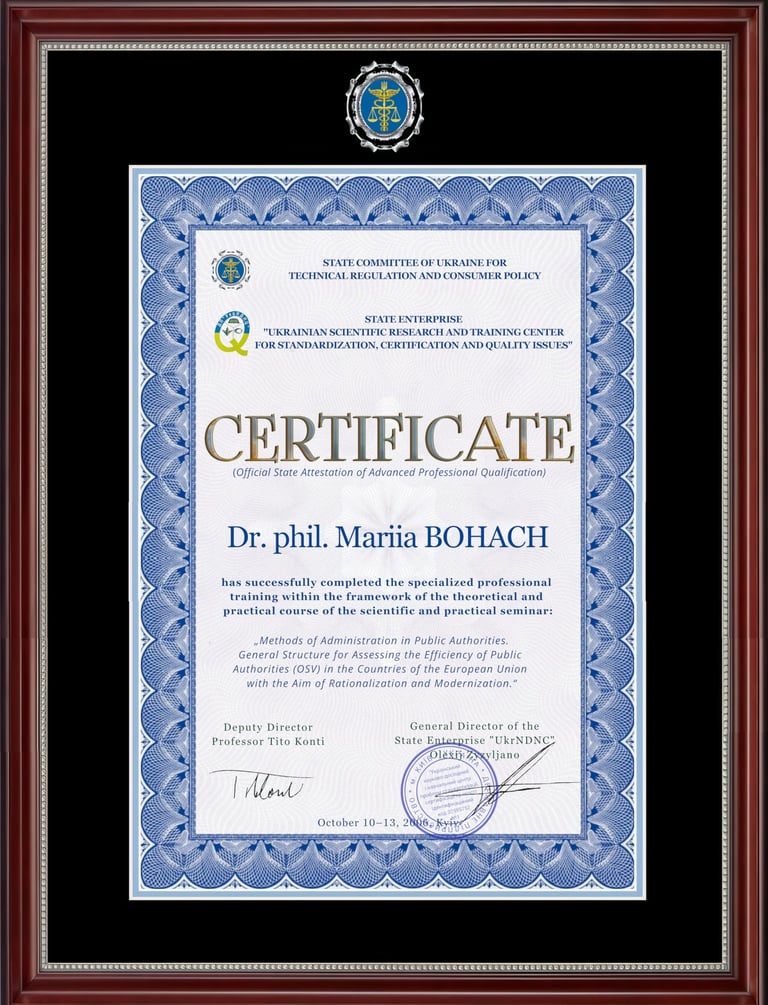
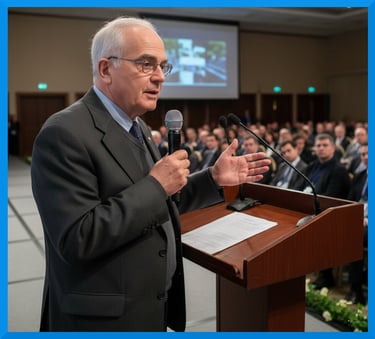
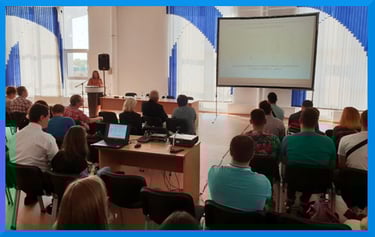
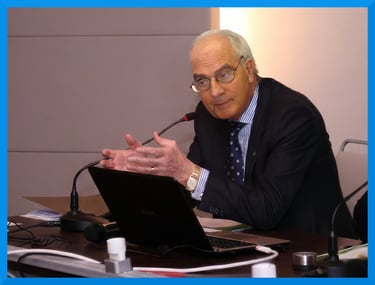
EXPERT CASE: Participation in the scientific-practical seminar "Administrative Methods in Government Authorities" under the personal leadership of Professor Tito Conti (Italy). Gaining knowledge directly from the Honorary President of the International Academy of Quality (IAQ) allowed for the verification of regional management approaches for compliance with global standards.
KEY FOCUS: Direct transfer of experience from the developer of the methodology. This ensured an understanding of the profound mechanisms of European quality policy and enabled the adaptation of the CAF toolkit to the structure of regional administration.
METHODOLOGY OF EXCELLENCE: Mastering the CAF Model
VERIFICATION AND RECOGNITION: From strategic consulting to certification
ESSENCE: Obtaining a methodological and consulting base for the implementation of quality management systems in the region in compliance with the Resolution of the Cabinet of Ministers of Ukraine No. 614.
EXPERT CASE: The learning process included an in-depth elaboration of algorithms for evaluating the performance efficiency of government authorities. The legal confirmation of obtaining world-class professional expertise was the contract for consulting services with the State Research and Training Center (UkrNDNC), which legitimized the implementation of these methods in the region.
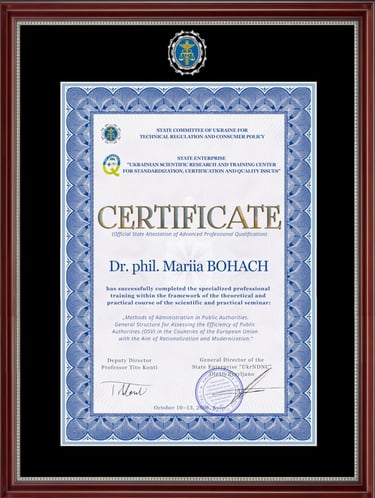
SUMMARY: The final stage of the intensive course and the confirmation of the successful mastery of European methodologies was the presentation of a personal certificate. This document recorded the readiness for the practical implementation of the CAF model in the civil service and became a significant addition to our "Proofs of Professional Success" as evidence of international expertise.
DIGITAL CHRONICLES AND FACTS: Archive Documents for 2006
ARCHIVE NOTE: Documents from various periods have been digitized and are stored in the database as originals in their language of issuance. For ease of navigation, the document list is presented in the language of the website interface. Detailed historical context and instructions for content translation can be found on the individual page of each document.
Joint Order No. 107/77 (04.04.2007): On amendments regarding the implementation of the QMS program in executive authorities.
Official Invitation (29.08.2006): Invitation from the State Committee for Technical Regulation to the seminar led by Professor Tito Conti.
Mission Report by PhD M.R. Bohach (04.10.2006): Participation in the scientific-practical seminar on "Administrative Methods in EU Countries for Rationalization and Modernization".
Service Contract No. 1/2006-17: Provision of information materials and consulting services regarding QMS implementation.
Seminar Program (Oct 10-13, 2006): Scientific supervision by Prof. Tito Conti (Italy). Focus: CAF model and management efficiency.
Tito Conti Expert Profile: Biography of the IAQ President and quality management expert.
Start your EAS attestation journey now.
Step into the ranks of successful European companies. The first step towards your audit is easier than you think — online, verifiable, flexible, and without hidden costs. Start your transformation now and become the number one in your market.


Your place next to the market leaders awaits.
CONTACTS


Moosbach,
Germany, 92709
ADDRESS
© 2026 European Attestation Standard (EAS). All rights reserved.
FOR OUR INTERNATIONAL PARTNERS:
Our website is available in German, Ukrainian, English, and Italian. To support our cooperation, we provide official EAS documents and attestation materials upon request, not only in these languages but also in any other required language by agreement.