
Behind the EAS™ standard lie two decades of methodological work, scientific research, and practical implementation at the state level. In this section, you will find the sources and key milestones that formed the basis of our modern professionalism.
Want to look behind the scenes and see the foundation from which today's EAS™ grew? Just turn the key, and then a history recorded in SPECIAL documents and facts will unfold before you. It is a long and successful journey that proves: EAS™ is far from just a modern marketing product.
It is a fundamental expert system of international level, shaped by real experience and capable of solving the most complex challenges of modern times in the most comfortable way for you.


BACKGROUND & ARCHIVE


Welcome to our expertise archive
2002–2003 | State control architecture: from Regulation to Strategy
The period of the early 2000s, influenced by European and global practices, became a stage of fundamental transformation of the state administration system in Ukraine. These changes particularly affected control as an effective instrument designed to regulate the process of fulfilling tasks set by the Government at the local level with a focus on a concrete result.
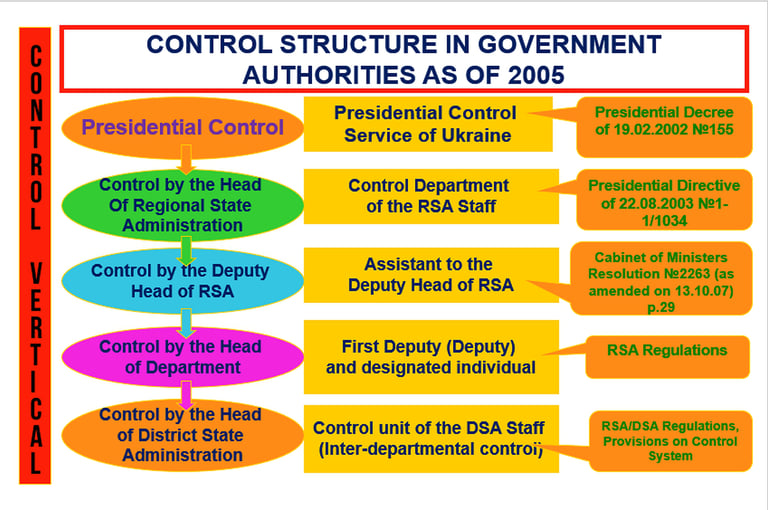
During this time, a radical shift occurred: from legacy formal record-keeping to a modern control system and the creation of an organic vertical of executive authorities and local self-government bodies to ensure impeccable executive discipline.
A key stage of the reform was the placement of control units under the direct subordination of the heads of regional state administrations and functional interaction with the Secretariat of the President of Ukraine.
PROCESS OF ESTABLISHMENT: Reforms in Action
PROFESSIONAL INTEGRITY: Expertise and Responsibility beyond Political Conjuncture
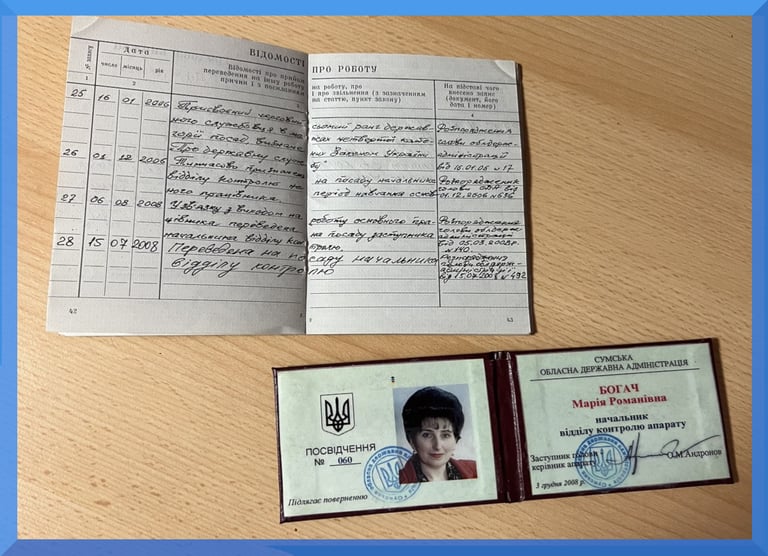
The beginning of the EAS™ founder's activity in the state sector coincided with a period of radical restructuring of the power vertical in Ukraine, making her a direct active participant in the development of the new control system.
8 subsequent years in the position of Head of the specialized department (7th rank, IV category of civil service) and responsibility for the implementation of new standards at the regional level represent a path of principled formation, where the professional standard stood above the struggle for mandates.
Indeed, during the period of 2002–2009, the leadership of the regional administration changed 8 times. Despite political turbulence and constant shifts in vectors, the Founder, within her powers, ensured the continuity of control processes and the stability of executive discipline. This became the ultimate test of professional integrity.
This experience of "institutional resilience" formed the foundation of the future EAS™ methodology, where process quality is an immutable constant regardless of external circumstances, namely:
Scalability: "Thousands of acts of the President and the Government, forming the development strategy of an entire region, were under direct control."
Innovation: "Transition from paper-based record-keeping to the first systems of operational electronic monitoring."
Methodological Leadership: "Development of unified control regulations, norms, and strategies that became the standard for all structural units of the region."
Professional Independence: "Ability to maintain the effectiveness of the management system under conditions of critical personnel rotation in the top leadership."


DIGITAL CHRONICLES AND FACTS: Archive Documents for 2002–2003
ARCHIVE NOTE: Documents from various periods have been digitized and are stored in the database as originals in their language of issuance. For ease of navigation, the document list is presented in the language of the website interface. Detailed historical context and instructions for content translation can be found on the individual page of each document.


Decree of the President of Ukraine dated 29.03.2000 No. 549/2000 "On measures to improve the organization of control over the execution of acts and instructions of the President of Ukraine."
Resolution of the Cabinet of Ministers of Ukraine dated 21.08.2000 No. 1290 "On approval of the Model Regulation on the control department of the regional state administration staff."
Analytical report on the status of execution of Decree No. 549 and the implementation of the "feedback" system (February 2002).
Decree of the President of Ukraine dated 19.02.2002 No. 155/2002 "On the procedure for organizing and exercising control over the execution of decrees, orders, and instructions of the President of Ukraine."
Report of the control department to the Board "On the status of execution of regulatory documents and executive discipline" (January-September 2002).
Letter from the Main Control Department of the Administration of the President of Ukraine dated 15.07.2003 No. 14-08/309 regarding participation in a methodological seminar.
Report of the control department to the Main Control Department of the Administration of the President of Ukraine "On the system of control organization in the region" (June 2003, prepared for the MCD seminar).
Order of the Head of the Regional State Administration dated 29.05.2003 No. 238 "On the status of executive discipline and measures to strengthen control."
Resolution of the Cabinet of Ministers of Ukraine dated 17.12.2003 No. 1967 "On amendments to the Model Regulation on the control department" (regarding direct subordination to the heads of regional state administrations).
Order of the Head of the Regional State Administration dated 22.09.2003 No. 414 "On the change of subordination of the control department."
2004–2005 | Control as a vector of a new era: from methodology to action
The year of transition from fragmented management decisions to a unified high-quality methodology. Control has transformed from a monitoring tool into a professional intellectual service.
Methodological Unification: Development of a system of codified regulations that ensured a unified standard of task execution from the highest authority to the lowest level of the management hierarchy.
Scaling of Competencies: Implementation of a continuous training system and "Control Days," which ensured system autonomy based on clear algorithms and rapid operational feedback.
TRANSFORMATION PROCESS: Crystallization of Standards
INSTITUTIONAL STABILITY:
Protection of Professional Logic
A period when the established methodology proved its autonomy and viability under conditions of radical political and structural transformations of the state apparatus.
System Stability: Successful resistance to attempts to abolish control structures. It has been proven that clearly defined methodological algorithms are more stable than personnel rotations and ensure the preservation of functionality regardless of external changes.
Analytical Transition: Rejection of "paper bureaucracy" in favor of electronic monitoring algorithms. Priority is set on the automation of technical processes to release intellectual human resources for deep expertise and forecasting.
In this way, for the first time in the regional executive authorities, new tools and work principles were introduced, and important basic components of process standardization were structured.
Implementation of the "E-Government" automated system.
Clear alignment of authorities (in accordance with ISO 9001:2000 – processes, services) within each structure and between structures.
Continuous improvement of the task execution system and the process of control over executive discipline. (Order of control organization).

DIGITAL CHRONICLES AND FACTS: Archive Documents for 2002–2003
ARCHIVE NOTE: Documents from various periods have been digitized and are stored in the database as originals in their language of issuance. For ease of navigation, the document list is presented in the language of the website interface. Detailed historical context and instructions for content translation can be found on the individual page of each document.


BLOCK 2004: Methodological Breakthrough
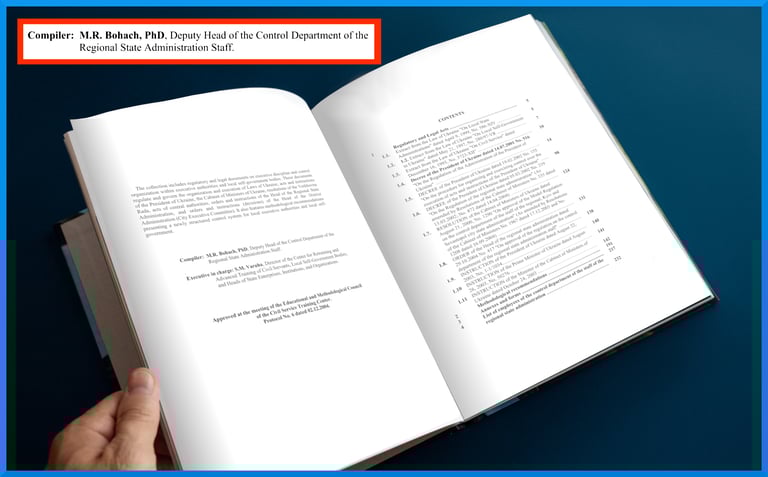
Author's Collection: "Compendium of Legal Documents and Methodological Recommendations" (Issue 1, 2nd edition, 2004), 225 p.
Cover letter and abstracts for the Cabinet of Ministers Conference (June 2004) "Discipline and Control in Executive Authorities."
Governor's Order No. 76 (02.03.2004): On executive discipline and introduction of disciplinary liability.
Government Resolution No. 1208 (16.09.2004): Amendments to the Model Regulation on Control Units.
Governor's Order No. 417 (29.10.2004): New Regulation on the RSA Staff Control Department.
Official Telegram (Electronogram) No. 14-1-3 (12.12.2004): Final meeting of regional control heads.
BLOCK 2005: System Protection and Analytics
Presidential Decree No. 1132 (26.07.2005): Control over execution of Presidential acts (with working resolutions).
Prime Minister's Directive No. 40297/1/1-05 (29.07.2005): On strict implementation of the new Decree on Control.
RSA Report No. 01-12/4609 (29.08.2005): Socio-economic development tasks and new control methodologies.
Governor's Directive No. 40297/38/1-05 (09.09.2005): On preservation and strengthening of control units.
Governor's Directive No. 42 (26.09.2005): Measures to strengthen discipline and activate e-document flow.
RSA Report No. 01-12/5675 (07.10.2005): Expansion of control staff to 8 members and functional modernization.
Internal Memo No. 02-5612/01-12 (11.10.2005): Violation of Presidential requirements regarding autonomy of district control units.
RSA Report No. 01-12/5678 (15.10.2005): Implementation of Government directives (to the Secretariat of CMU).
Prime Minister's Directive No. 58950/1/1-05 (07.11.2005): Improving Government control over local administrations.
Analytical Report No. 01-12/6927 (22.11.2005): Reforming the monitoring system (for the Governor).
Analytical Report No. 01-12/6927-1 (22.11.2005): State of executive discipline in the region.
Final Performance Report for 2005 (as of 01.01.2006): Detailed system efficiency analysis for the Governor.
Activity Report No. 01-11/27-1 (15.01.2006): Results of control activities for the Presidential Administration.
2005 | The formula of excellence: from administrative standards to a global philosophy of quality
The year became a turning point — going beyond the limits of classical state administration. Direct integration into the professional community of quality leaders (EOQ, EFQM) allowed the transformation of the control function into the intellectual component of the Quality Management System (QMS). It was a conscious transition from oversight to building an Excellence Model, where control is merely a tool for process verification.
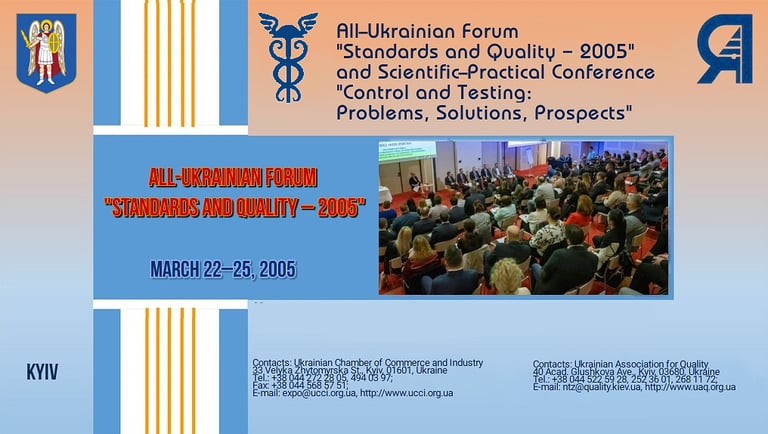
VERIFICATION IN THE ISO 9001 SYSTEM: All-Ukrainian Forum "Standards and Quality 2005"
EUROPEAN PROJECTION OF EXCELLENCE: Participation in the 5th International Quality Conference
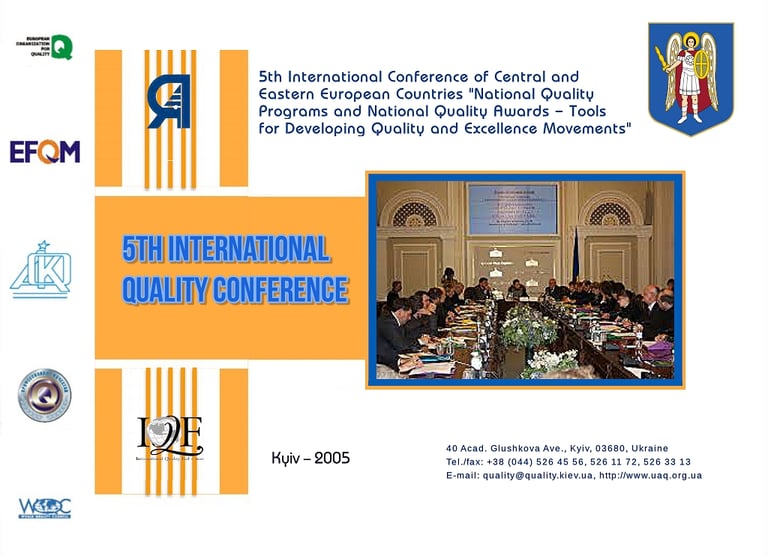
In late September 2005, the 5th International Conference of Central and Eastern European Countries "National Quality Programs and National Quality Awards – Tools for Developing Quality and Excellence Movements" was held in the capital of Ukraine.
ORGANIZERS: European Organization for Quality (EOQ) and the Ukrainian Association for Quality (UAQ) supported by the UN and the European Foundation for Quality Management (EFQM).
ESSENCE: Scaling the experience to the level of the EFQM Excellence Model through direct interaction with the international expert community.
EXPERT CASE: Formation of the architecture of management systems based on European standards. Direct communication with quality leaders from 20 countries allowed for the synchronization of local management processes with global management trends.
RESULT: Adoption of the Resolution on the harmonization of national programs with international ISO 9000 standards. This provided a powerful impetus for increasing the competitiveness of regional administration and the practical implementation of QMS.
DIGITAL CHRONICLES AND FACTS: Archive Documents for 2005
ARCHIVE NOTE: Documents from various periods have been digitized and are stored in the database as originals in their language of issuance. For ease of navigation, the document list is presented in the language of the website interface. Detailed historical context and instructions for content translation can be found on the individual page of each document.
All-Ukrainian Forum "Standards and Quality – 2005".
Invitation Letter: Official letter from the leadership of the Ukrainian Chamber of Commerce and Industry and the Ukrainian Association for Quality (UAQ) dated 05.03.2005 No. 358/05 to participate in the Forum.
Forum Program.
Travel Documentation: Mission orders for M.R. Bohach regarding participation in the Forum.
Abstracts of the Presentation: PhD M.R. Bohach at the scientific-practical conference "Control and Testing: Problems, Solutions, Prospects."
5th International Quality Conference.
Presidential Decree No. 1105/2005 (13.07.2005): "On measures to improve activities in the field of technical regulation and consumer policy."
Invitation Letter: Official letter from P.Ya. Kalyta to the Governor (Head of the RSA) dated 25.08.2005 No. 428/05 to participate in the 5th International Conference.
Travel Documentation: Mission orders for M.R. Bohach regarding participation in the Conference.
Publication: "The Ukrainian Path to European Excellence: Quality as a National Idea." Compendium of materials, Kyiv – 2006, compiled by P.Ya. Kalyta.
Conference Resolution: Resolution of the 5th International Conference of Central and Eastern European Countries "National Quality Programs and National Quality Awards – Tools for Developing Quality and Excellence Movements."
On March 22–25, 2005, the All-Ukrainian Forum "Standards and Quality – 2005" and the scientific-practical conference "Control and Testing: Problems, Solutions, Prospects" were held.
ORGANIZERS: Ukrainian Chamber of Commerce and Industry and the Ukrainian Association for Quality.
ESSENCE: Scientific and practical testing of the integration of existing management algorithms into the structure of the international ISO 9001 standard.
EXPERT CASE: Participation in the first scientific-practical conference "Control and Testing: Problems, Solutions, Prospects." Presentation of the methodology of "continuous monitoring" of control as a process within the overall quality system from a management perspective.
KEY FOCUS: Transition from detecting violations to preventing deviations at all stages of the management decision life cycle. The civil service receives a toolkit that ensures a level of efficiency inherent in global business.
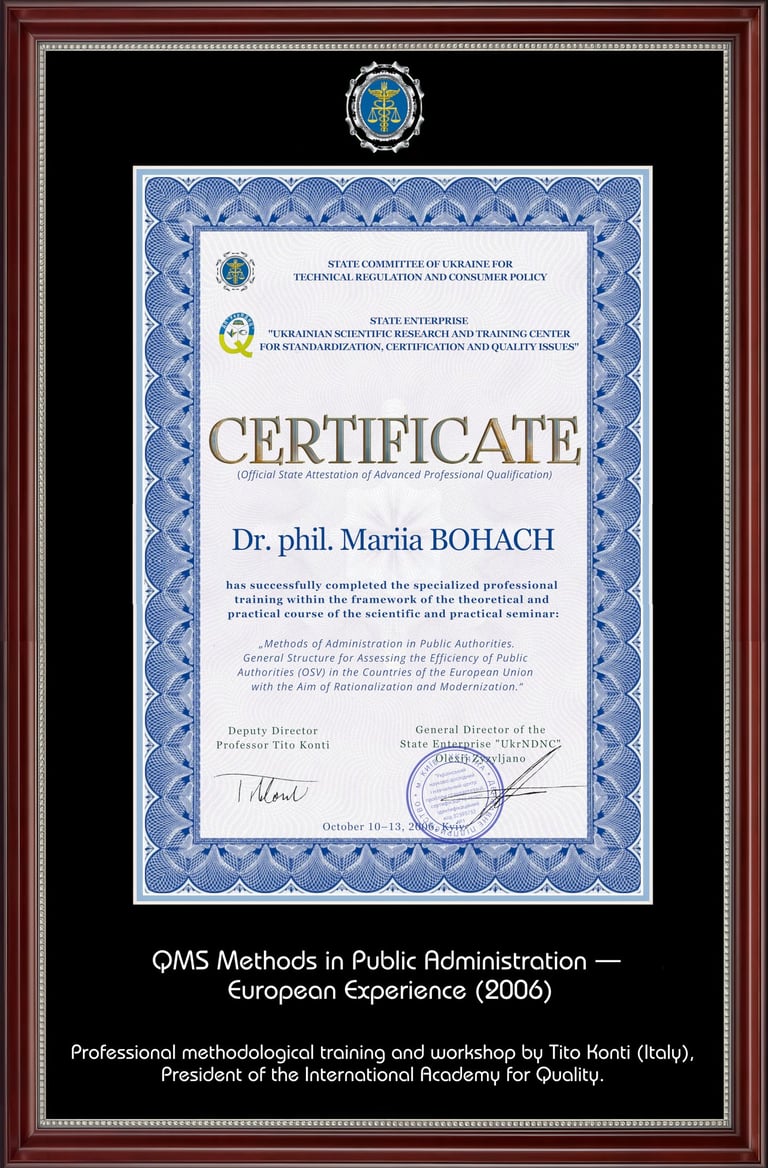
2006 | World-class expertise: Learning from Quality Management Legend Tito Conti
ESSENCE: Mastering the CAF (Common Assessment Framework) model — the European standard of excellence developed specifically for the public sector. This tool allows for a transition from error detection to the systematic rationalization of the state apparatus.
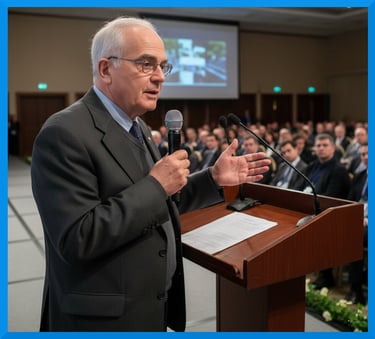
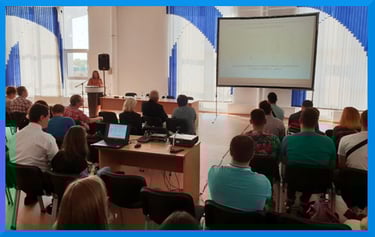
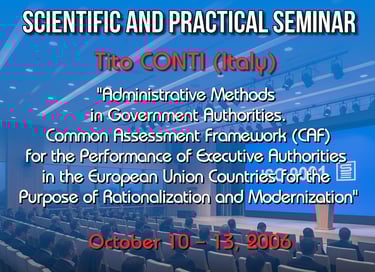
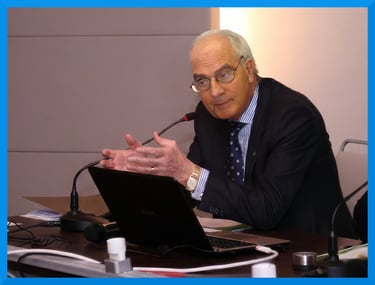
EXPERT CASE: Participation in the scientific-practical seminar "Administrative Methods in Government Authorities" under the personal leadership of Professor Tito Conti (Italy). Gaining knowledge directly from the Honorary President of the International Academy of Quality (IAQ) allowed for the verification of regional management approaches for compliance with global standards.
KEY FOCUS: Direct transfer of experience from the developer of the methodology. This ensured an understanding of the profound mechanisms of European quality policy and enabled the adaptation of the CAF toolkit to the structure of regional administration.
METHODOLOGY OF EXCELLENCE: Mastering the CAF Model
VERIFICATION AND RECOGNITION: From strategic consulting to certification
ESSENCE: Obtaining a methodological and consulting base for the implementation of quality management systems in the region in compliance with the Resolution of the Cabinet of Ministers of Ukraine No. 614.
EXPERT CASE: The learning process included an in-depth elaboration of algorithms for evaluating the performance efficiency of government authorities. The legal confirmation of obtaining world-class professional expertise was the contract for consulting services with the State Research and Training Center (UkrNDNC), which legitimized the implementation of these methods in the region.
SUMMARY: The final stage of the intensive course and the confirmation of the successful mastery of European methodologies was the presentation of a personal certificate. This document recorded the readiness for the practical implementation of the CAF model in the civil service and became a significant addition to our "Proofs of Professional Success" as evidence of international expertise.
DIGITAL CHRONICLES AND FACTS: Archive Documents for 2006
ARCHIVE NOTE: Documents from various periods have been digitized and are stored in the database as originals in their language of issuance. For ease of navigation, the document list is presented in the language of the website interface. Detailed historical context and instructions for content translation can be found on the individual page of each document.
Joint Order No. 107/77 (04.04.2007): On amendments regarding the implementation of the QMS program in executive authorities.
Official Invitation (29.08.2006): Invitation from the State Committee for Technical Regulation to the seminar led by Professor Tito Conti.
Mission Report by PhD M.R. Bohach (04.10.2006): Participation in the scientific-practical seminar on "Administrative Methods in EU Countries for Rationalization and Modernization".
Service Contract No. 1/2006-17: Provision of information materials and consulting services regarding QMS implementation.
Seminar Program (Oct 10-13, 2006): Scientific supervision by Prof. Tito Conti (Italy). Focus: CAF model and management efficiency.
Tito Conti Expert Profile: Biography of the IAQ President and quality management expert.
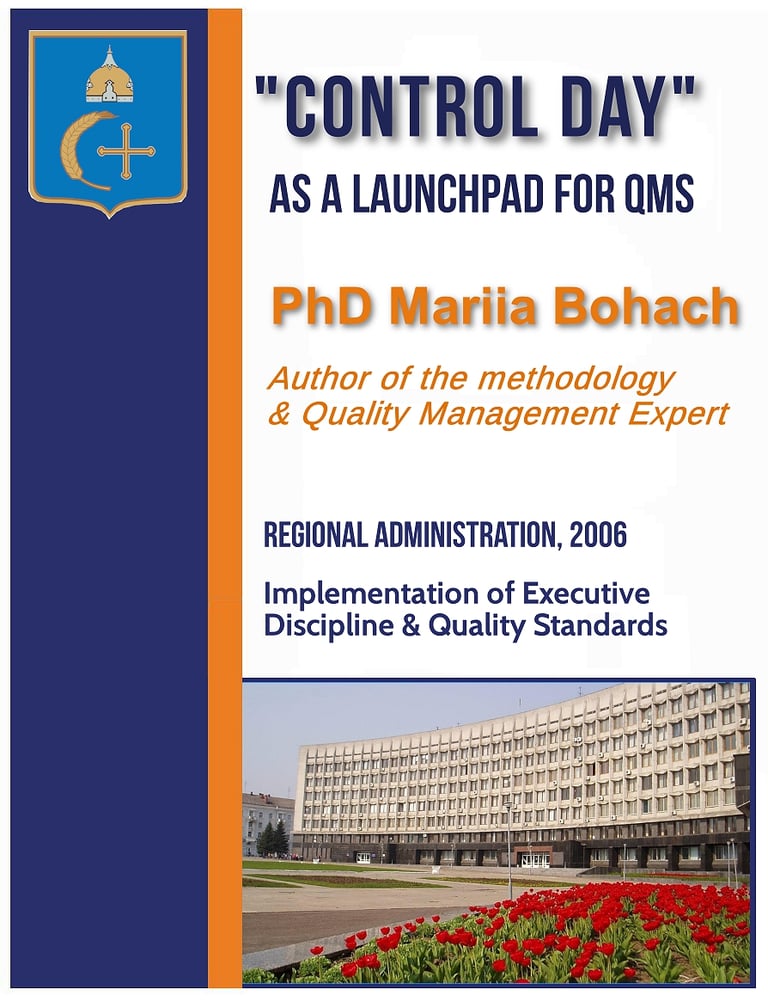
2006 | Author's Project: "Control Day" as a Launchpad for QMS Implementation
MODERNIZATION OF THE VERTICAL: practical implementation of standards on the ground
VALIDATION OF EFFICIENCY: official recognition and verification of status
IESSENCE: The high efficiency of the author's methodology of PhD Mariia Bohach (today the founder and owner of EAS, and at that time — Deputy Head of the Control Department) and the responsibility and proper discipline in the staff of the regional state administration and regions were officially recognized by the regional leadership.
RESULT: The result of the year was the assignment of the next 7th rank of a civil servant and a Commendation from the Head of the regional state administration for conscientious work. This became the final legitimation of the professional conviction of the EAS founder: clear and systemic control is the only way to high quality.
SUMMARY: "Control Day" fulfilled the role of a strategic launchpad, from which the process of deploying the Quality Management System (QMS) at the level of the entire region officially started in October 2006.
DIGITAL CHRONICLES AND FACTS: Archive Documents for 2005
ARCHIVE NOTE: Documents from various periods have been digitized and are stored in the database as originals in their language of issuance. For ease of navigation, the document list is presented in the language of the website interface. Detailed historical context and instructions for content translation can be found on the individual page of each document.
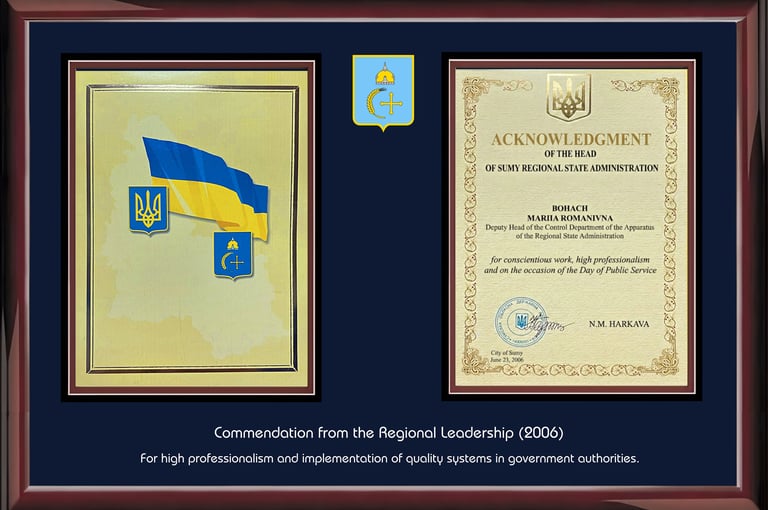
Submission for the assignment of the 7th rank of a civil servant (dated 16.01.2006).
Order of the Head of the Sumy RSA No. 297 "On conducting 'Control Day' in local executive authorities and local self-government bodies of the region" (dated 08.06.2006).
Letter to the Cabinet of Ministers of Ukraine regarding the implementation of protocol No. 18 directives and the introduction of new methods of executive discipline (dated 18.06.2006).
Letter to the Main Service of Regional Policy of the Secretariat of the President of Ukraine regarding the ensuring of the structure of control units in the region (dated 07.11.2006).
Official invitation to the one-day methodological-practical seminar "Implementation of Quality Management System in Executive Authorities" (dated 09.12.2006).
Order of the Head of the Sumy RSA No. 728 "On the state of executive discipline and measures for its strengthening" (dated 26.12.2006).
Final analytical report on the state of executive discipline and organization of task implementation for 2006 (dated 15.01.2007).
ESSENCE: Creating a basis for the implementation of international quality standards through a radical strengthening of executive discipline. This was a stage of "clearing the site" — transforming formal oversight into a viable instrument of management efficiency.
EXPERT CASE: Implementation of the monthly mobile "Control Day." These were not punitive measures, but practical assistance missions with field visits to provide and implement new tools and work systems and to train regional units (both new and reorganized) to work according to QMS algorithms.
GEOGRAPHY AND OBJECTS: Control went beyond offices: this made it possible to verify management quality through real objects — from administrative institutions and social facilities to education centers, food and light industry objects, as well as unique historical monuments and ecosystems.
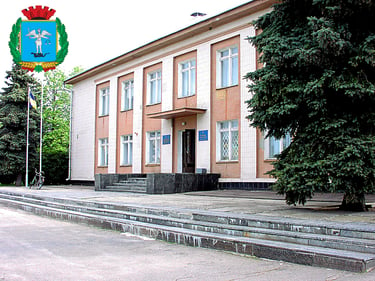
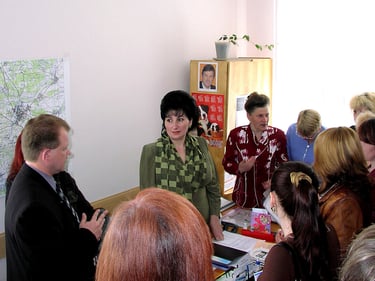
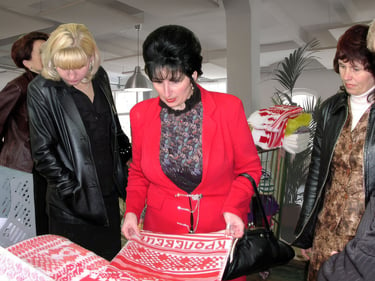
LOCATION 1: Krolevets local authorities. To ensure unified QMS standards at the district level, a verification of management processes was conducted directly within the district state administration staff and subordinate institutions. Special attention was paid to the implementation of control algorithms, which became the basis for future certification of the entire vertical.
VISUAL CHRONICLE OF THE "CONTROL DAY": Krolevets District
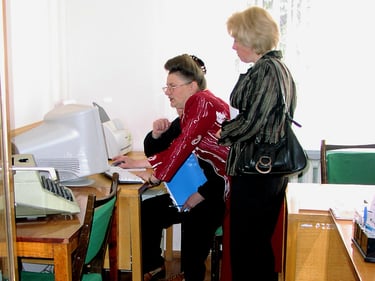
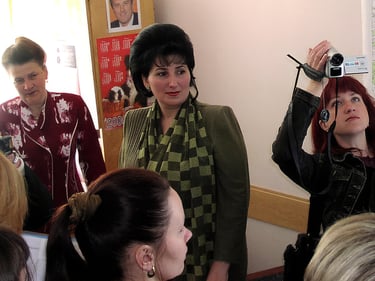
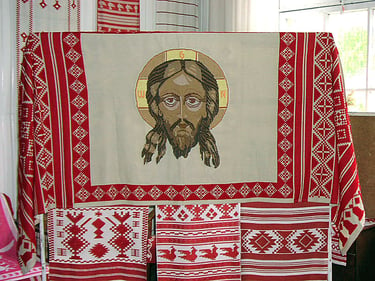
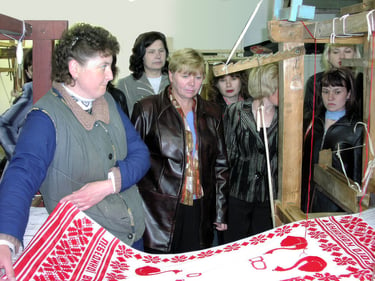
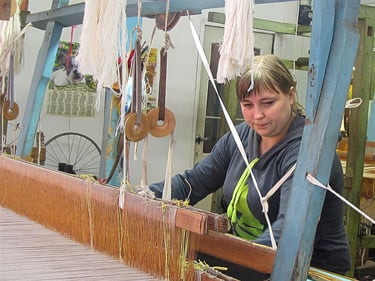
LOCATION 2: Krolevets artistic weaving — preserving authentic heritage. As an object of cultural and historical significance, the legendary weaving factory was famous for its unique artistic techniques and ancient traditions. Photo-documentation of work processes on authentic looms and review of unique patterns of towels became part of the verification of the state of preservation of national heritage in conditions of complex economic transformations.
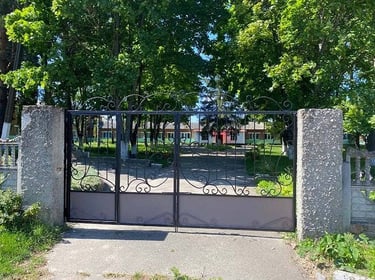
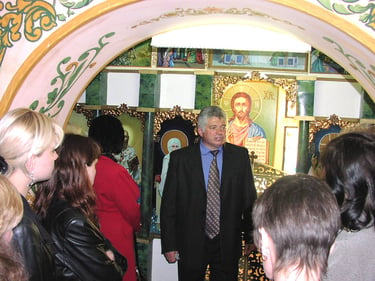
LOCATION 3: Social sphere — standards of care and state guardianship. During field events, an assessment of the real living conditions of the community was carried out. A thorough verification of service quality in social institutions, in this case, the Krolevets boarding house for the elderly and people with disabilities, allowed for adapting QMS principles to human needs. This ensured the transition from formal oversight to a viable instrument for protecting the interests of the most vulnerable segments of the population.
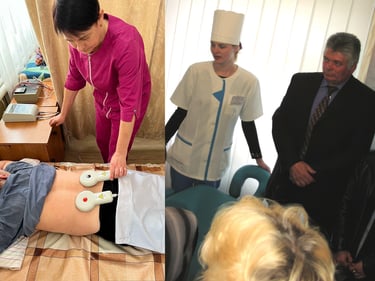
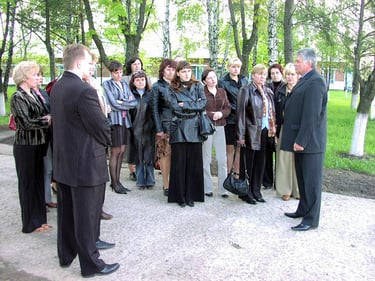
LOCATION 4: Ecological responsibility — preservation of natural treasures. The quality management system in the region also covered the monitoring of the state of natural reserve fund objects. Particular attention was paid to a monument of global significance — the "Apple-Tree Colony." This approach emphasized the importance of preserving natural capital as a mandatory component of sustainable development of the region and a responsible attitude of authorities to ecological heritage.


2006 | Scaling of Standards: from national methodology to regional training
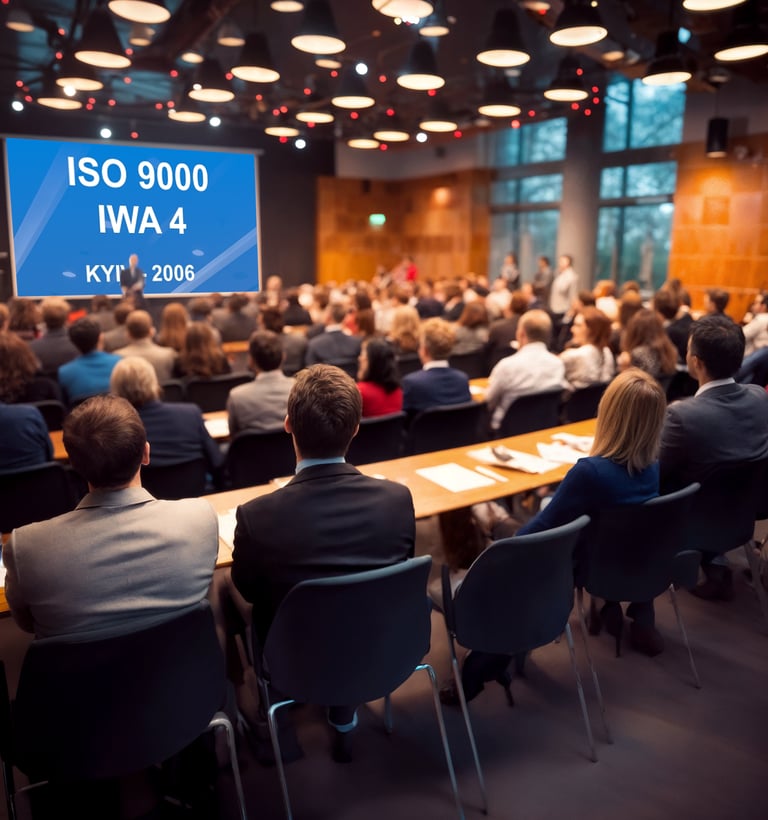
EVENT CONTEXT: Professional training at the national level (31.10 – 03.11.2006) based on the Main Department of Civil Service of Ukraine. Focus of the event — mastering the package of national standards of the ISO 9000 series and specialized guidelines IWA 4:2005 (Quality management systems in local government) for local authorities and local self-government bodies.
EXPERT CASE: Deep adaptation of theoretical requirements of international standards to the specifics of the Ukrainian civil service. Working with primary sources allowed PhD M. Bohach, as an authorized representative of local authorities, to build a methodological base for future process management in the region.
RESULT AND VALUE: An author's package of methodological recommendations was formed, which became the intellectual basis for the implementation of the quality system. This scientific-practical training experience allowed for obtaining a methodological base that would be successfully transformed into an effective roadmap for the region.
METHODOLOGICAL ADAPTATION: mastering ISO standards and IWA 4 (Kyiv)
CREATION OF REGIONAL QUALITY INFRASTRUCTURE: Launch of the Coordination Council and large-scale methodological training in the region (Sumy)
EVENT CONTEXT: regional seminar (14.12.2006) for the regional management staff based on the newly created Coordination Council under the regional head (Order No. 547).
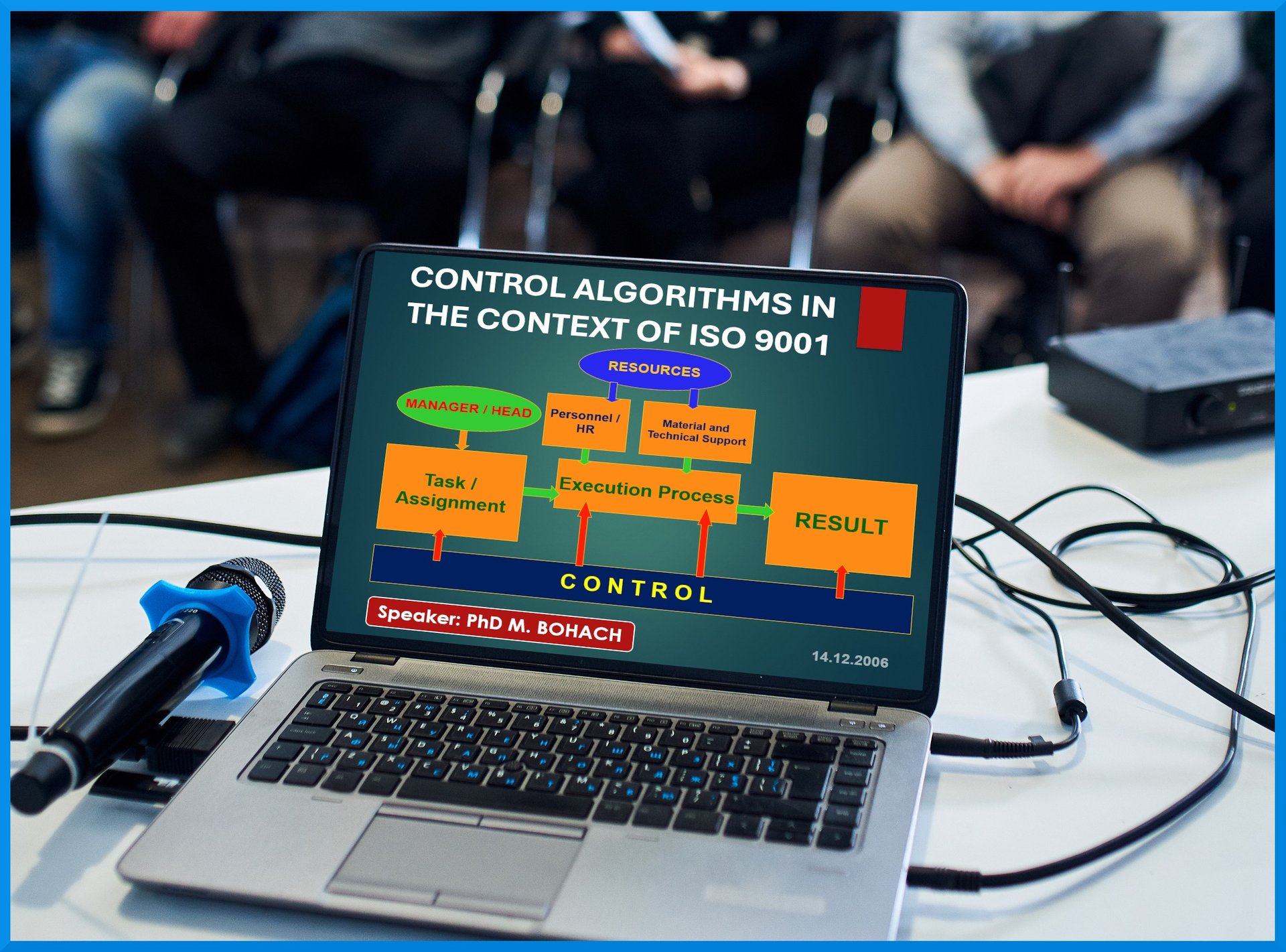
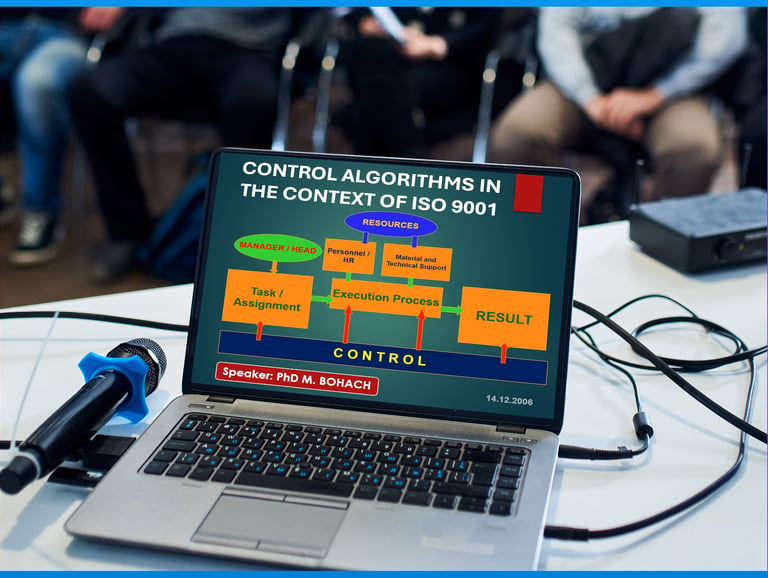
EXPERT CASE: First public presentation of the QMS model as a tool for increasing efficiency in local authorities. PhD Mariia Bohach, in her role as Secretary of the Coordination Council and key project architect, prepared a basic package of normative documentation and draft resolution decisions for discussion and approval at the conference. Also, her final presentation-report as the Head of the Control Department became a practical demonstration of the developed QMS architecture, visually confirming the readiness of the control segment for the transition to international management standards. The culmination of the event was the Seminar Resolution, a strategic manifesto that for the first time introduced measurable efficiency criteria (KPIs) for civil servants.
RESULT AND VALUE: Based on primary sources, an author's model of transition from traditional bureaucratic management to a service-oriented system was developed. This became the first example of successful integration of ISO 9001 standards into the complex processes of local self-government. Thus, a precedent was created where complex management tools were presented through the prism of practical benefit (transparency, clarity of tasks, saving of working time). This laid the foundation for transforming regional management into a modern and efficient structure.
DIGITAL CHRONICLES AND FACTS: Archive Documents for 2006
ARCHIVE NOTE: Documents from various periods have been digitized and are stored in the database as originals in their language of issuance. For ease of navigation, the document list is presented in the language of the website interface. Detailed historical context and instructions for content translation can be found on the individual page of each document.
Internal memo on the mission to Kyiv (dated 24.10.2006).
Order of the Head of the RSA No. 547 "On the creation of a coordination council for the development and maintenance of a quality management system" (dated 25.10.2006).
Official invitation to the methodological-practical seminar in Sumy (dated 09.12.2006).
Seminar program "Implementation of quality management system in executive authorities" (dated 14.12.2006).
Seminar Resolution — quality manifesto and efficiency criteria (KPI) of state management (dated 14.12.2006).
2007 | Quality as a National Idea: V All-Ukrainian Quality Congress
STATE QUALITY POLICY: strategic representation at the regional level
PARTNERS AND CO-ORGANIZERS: International, key state and public partners and specialized structures
DIGITAL CHRONICLES AND FACTS: Archive Documents for 2007
ARCHIVE NOTE: Documents from various periods have been digitized and are stored in the database as originals in their language of issuance. For ease of navigation, the document list is presented in the language of the website interface. Detailed historical context and instructions for content translation can be found on the individual page of each document.
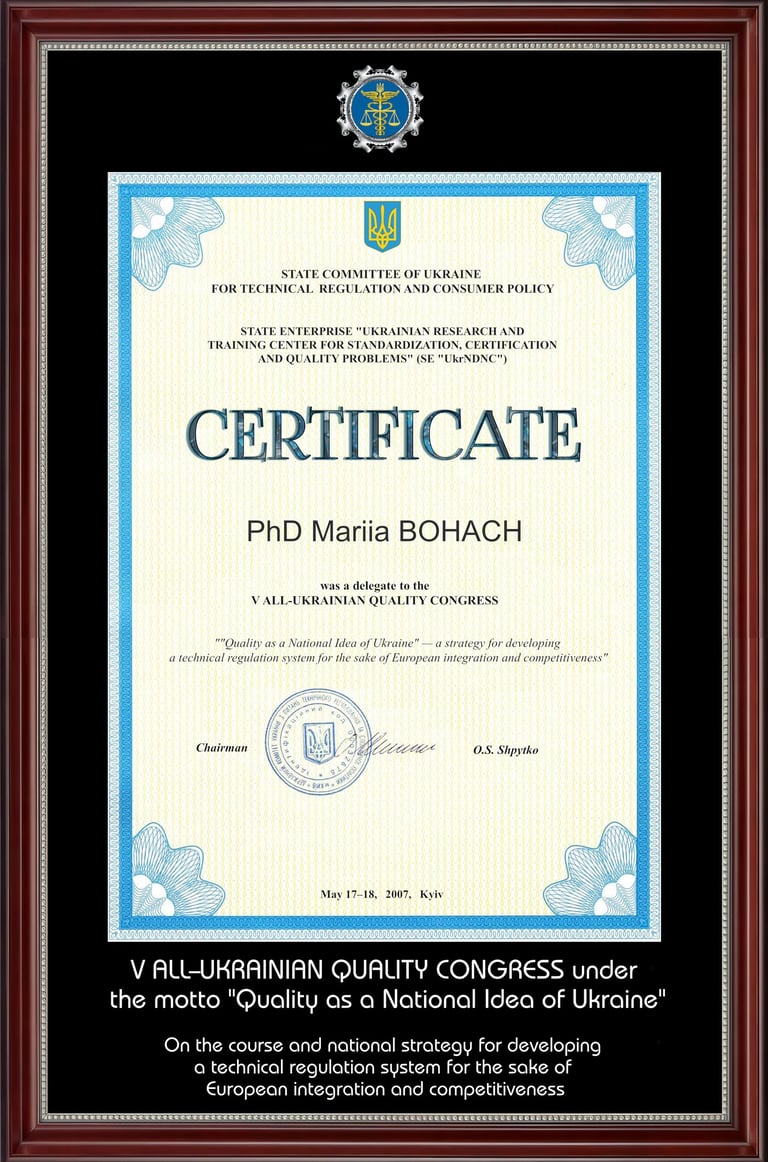
Delegate Certificate of the V All-Ukrainian Quality Congress (restored original, Kyiv, May 17–18, 2007).
Mission Report No. 30 dated 14.05.2007 on fulfilling the assignment of the State Committee for Technical Regulation of Ukraine No. 3442-2-7/14.
Submission letter from the Deputy Head of the RSA No. 14/3442 dated 15.05.2007 regarding delegation and financial support for the expert's participation.
Expense report No. 34, certifying actual attendance at the forum and fulfillment of tasks.
Program of the V All-Ukrainian Quality Congress detailing thematic panels on technical regulation issues and ISO standards.
Congress Resolution, which recorded strategic decisions on the implementation of the "Quality as a National Idea" model into the state management system of Ukraine.
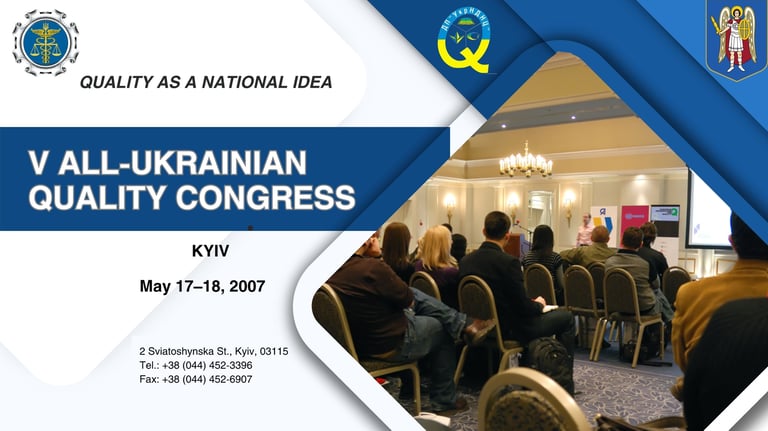
EVENT CONTEXT: 5th All-Ukrainian Quality Congress (May 17–18, 2007, Kyiv), organized by the Ukrainian Association for Quality (UAQ) together with state and sectoral structures under the auspices of the Government.
GOAL OF THE EVENT — formation of state policy in the sphere of quality, exchange of experience, determination of priorities for the development of management systems and competitiveness of Ukrainian enterprises. Traditionally organized by the Ukrainian Association for Quality.
STATUS: Official delegate from the Sumy region (according to the assignment of the State Committee for Technical Regulation of Ukraine No. 3442-2-7/14 and the order of the regional state administration) as the secretary of the coordination council for QMS implementation in the region and head of the control structural unit, based on which practical ISO 9001 modules were already successfully tested.
CONTEXT: The main event of the year in the sphere of state management under the motto "Quality as a National Idea of Ukraine". The congress became a platform for determining the strategy for building a technical regulation system for the sake of European integration and competitiveness of the national economy.
EXPERT CONTRIBUTION: Participation in the formation of the congress resolution regarding the introduction of a systemic approach to the management of executive authorities. Presentation of the regional experience of Sumy as a successful case of adapting international ISO 9001 standards in the state sector.
RESULT: This congress became the foundation for the harmonization of Ukrainian standards with EU directives, and the Delegate Certificate of the V All-Ukrainian Quality Congress is a verification of professional competencies at the highest state level.
VERIFICATION: evidence of professional competencies at the highest state level





2007 | Innovation Management: Effective Document Management and European Quality Practices
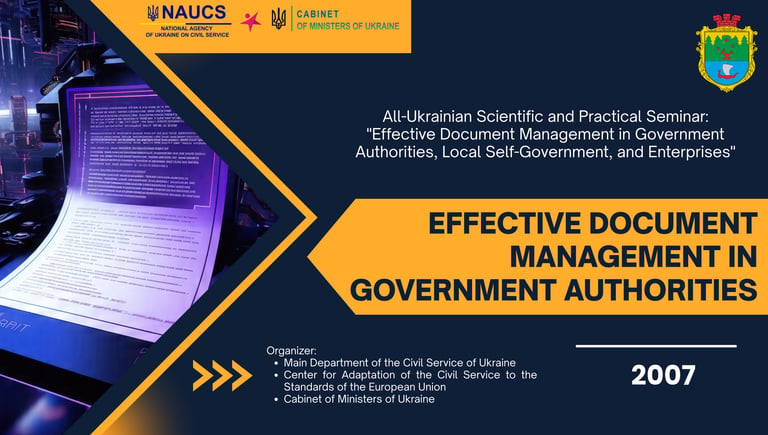
EVENT: All-Ukrainian scientific-practical seminar "Effective Document Management in Government Authorities, Local Self-Government, and Enterprises" organized by the Main Department of the Civil Service of Ukraine, the Center for Adaptation of the Civil Service to the Standards of the European Union, and supported by the Cabinet of Ministers of Ukraine (Kyiv, June 21–23, 2007).
DIGITALIZATION OF STATE MANAGEMENT: Integration of the "Electronic Control" system and the "Kartka" personnel platform (Kyiv)
VERIFICATION: evidence of professional competencies at the highest state level
TECHNOLOGICAL SOLUTION: Participation in the national strategic seminar as a participant and speaker on the digital transformation of government processes, representing the regional administration. Presentation of the author's system "Electronic Control" — an adaptive platform based on MS Excel and VBA macros. The system allowed for automating the full cycle of document control: from registration and creation of control cards to the automatic generation of reports and execution schedules.
EXPERT CONTRIBUTION: Adaptation of the "Kartka" personnel system (version 5.0) to the requirements of electronic document management. Development of methodological recommendations and the "User Manual" for the implementation of paperless technologies in the RSA and DRA, which ensured a single control standard in the region.
RESULT: Creation of a universal automation tool that "flexibly adapted" to any organizational structure, ensuring transparency and executive discipline without additional costs for expensive software.
DIGITAL CHRONICLES AND FACTS: Archive Documents for 2007
ARCHIVE NOTE: Documents from various periods have been digitized and are stored in the database as originals in their language of issuance. For ease of navigation, the document list is presented in the language of the website interface. Detailed historical context and instructions for content translation can be found on the individual page of each document.
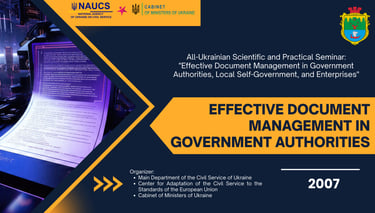
Internal memo and expense report for the mission to Kyiv (June 21–23, 2007).
Technical documentation: User Manual for the "Kartka" system and analysis of personnel card exports (version 1.4).
Author's development: Databases of control documents (XLS platform "Electronic Control").
Methodological support: Fact sheet for using the electronic document management journal and List of methodological recommendations.
Seminar program.
Textbook: "Electronic Document Management" (Institute of Public Administration and Law, 2005–2007).
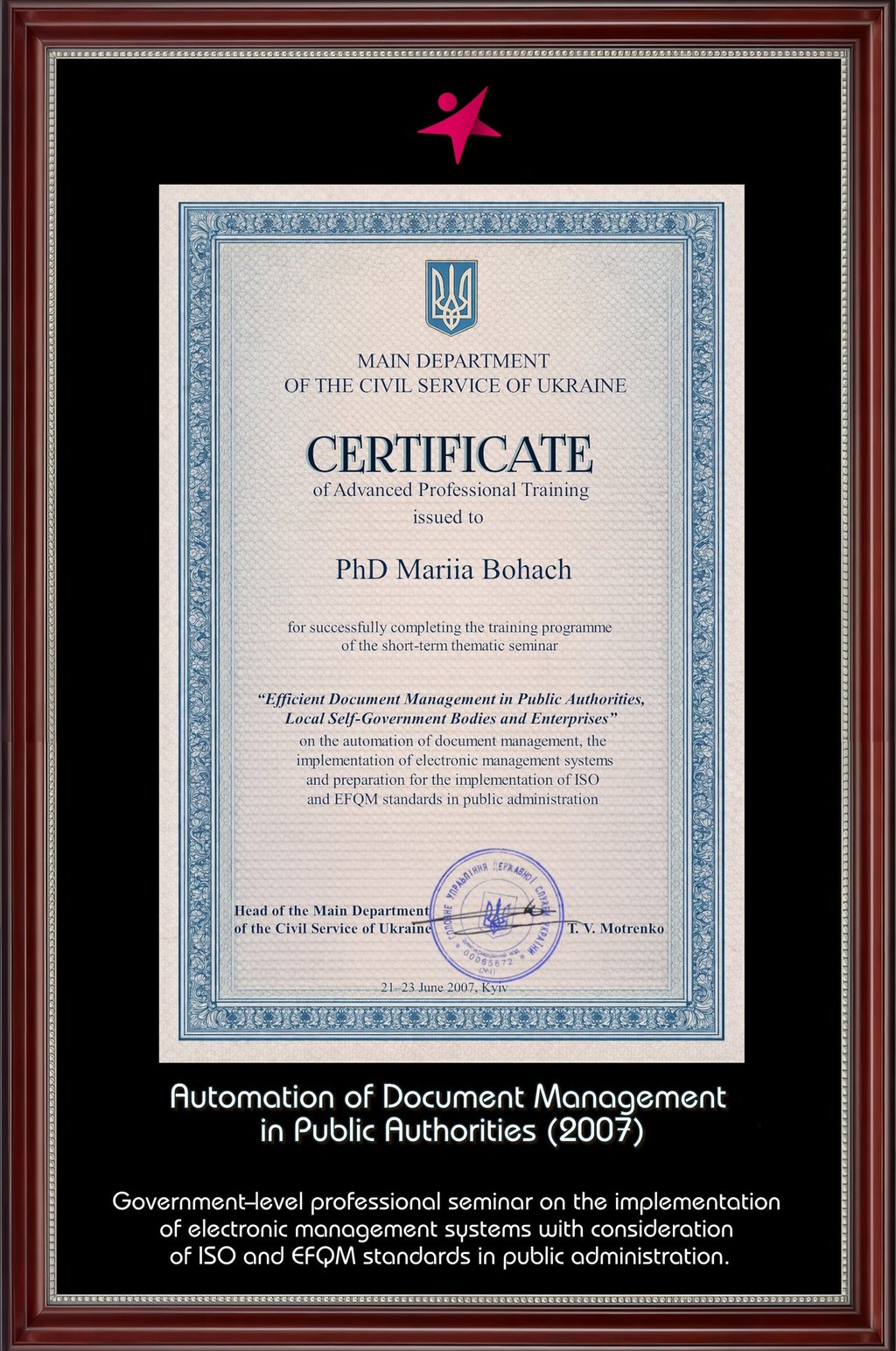
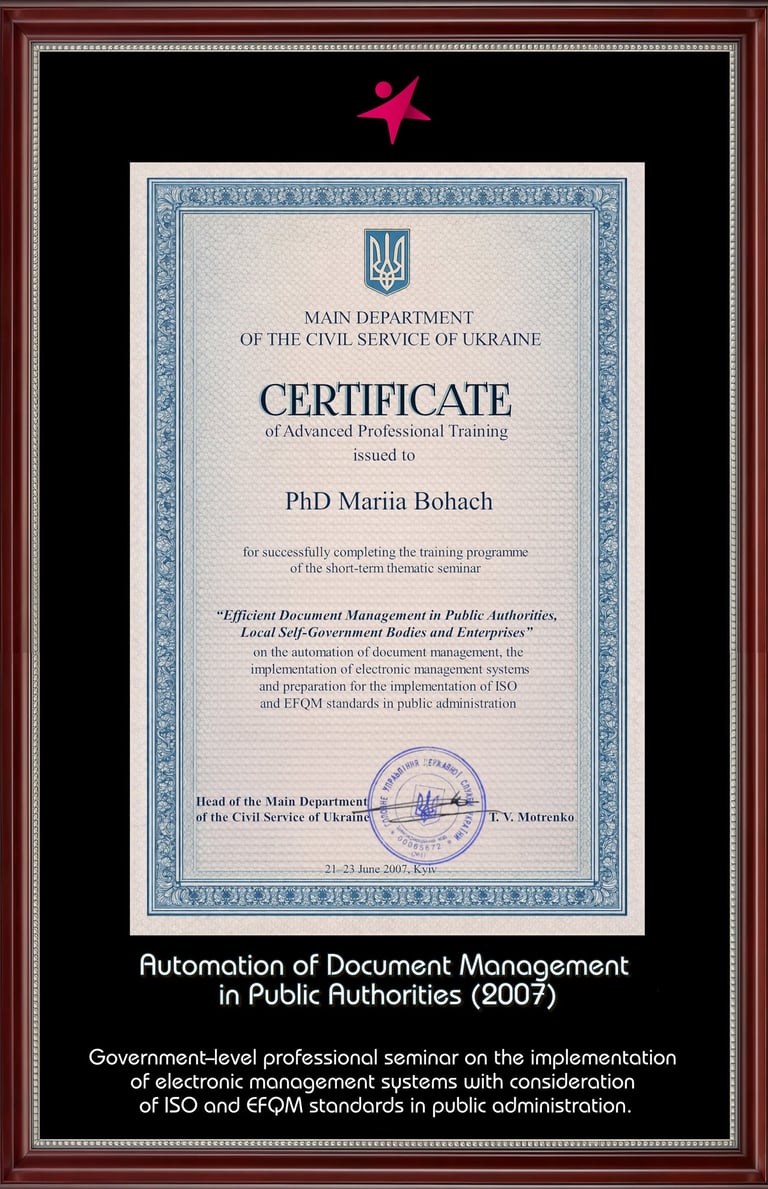
2007 | International Expertise: EU Standards and EFQM Model
EUROPEAN EXPERIENCE: implementation of QMS in authorities and EFQM business excellence models
DIGITAL CHRONICLES AND FACTS: Archive Documents for 2007
ARCHIVE NOTE: Documents from various periods have been digitized and are stored in the database as originals in their language of issuance. For ease of navigation, the document list is presented in the language of the website interface. Detailed historical context and instructions for content translation can be found on the individual page of each document.
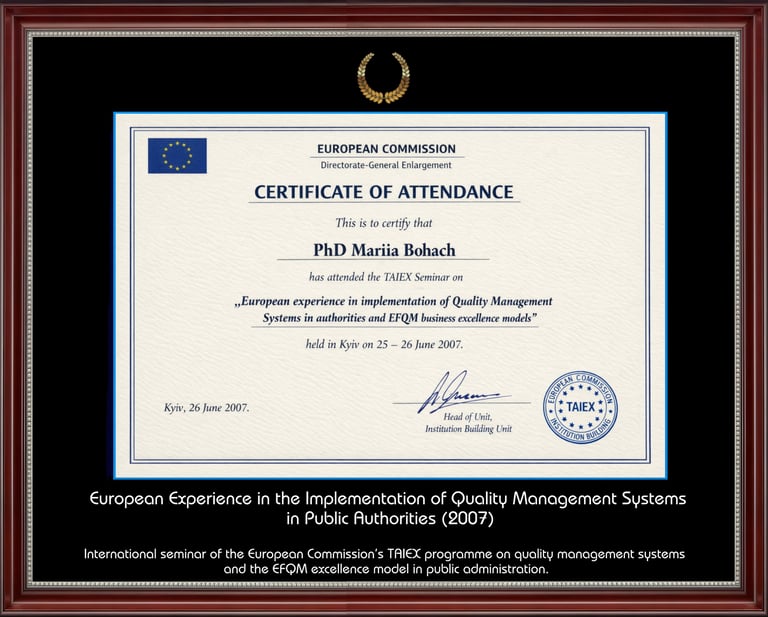
Internal memo No. 41/2 dated 19.06.2007 on participation in the international seminar under the TAIEX program.
Expense report (June 2007), confirming participation in events at the European level.
Action plan of the Sumy RSA for 2006–2007 regarding the introduction of QMS (a fundamental document developed on the basis of the received methods).
Program of the event.
Report on the implementation of the Resolution of the Cabinet of Ministers of Ukraine No. 614, where the results of QMS introduction and the conduct of audits in Shostka and Konotop are recorded.
Implementation schedule (Harmonogram) — adapted European methodology for the rollout of ISO 9001 for state institutions.
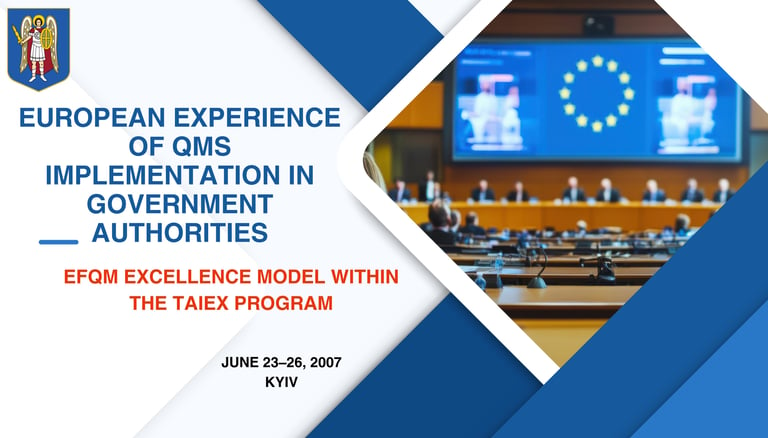
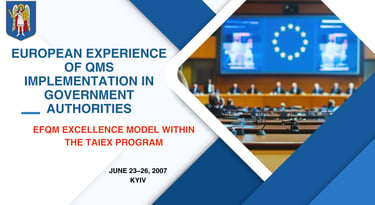
EVENT: International seminar within the framework of the European Commission's TAIEX program (Kyiv, June 25–26, 2007).
THEME: "European experience in the implementation of quality management systems in authorities and EFQM business excellence models (European Foundation for Quality Management)".
CONTEXT: Work with European experts through a simultaneous translation system. Study of practical cases of public sector transformation in EU countries (Czech Republic, Poland, Germany) based on the excellence model.
PRACTICAL APPLICATION: The acquired knowledge became the basis for the development of the "Action Plan for the introduction of QMS in the region for 2006–2007" (approved by P.S. Kachur and coordinated with UkrNDNC) and the development of schedules for the implementation of ISO 9001 for structural subdivisions.
PARTICIPATION AND INTERNATIONAL VERIFICATION: European experience and excellence models
RESULT: Acquired expertise in the field of European management standards (TAIEX program): As part of the participation in international technical assistance programs of the European Commission (2007), the following competencies were acquired and implemented:
Adaptation of European experience: Transfer of best practices of EU countries into the activities of executive authorities at the regional level.
Management by results: Transition from formal paper control to quality management of the final product of state activity.
Institutional building: Ability to identify "weak points" in the management structure through self-assessment tools and develop plans for their elimination.
Excellence culture: Formation of an environment for continuous process improvement in the institution (PDCA cycle — Plan-Do-Check-Act).
Integration of European assessment tools (EFQM model): Integration into the regional control system, which allowed the Sumy region to become a leader in the implementation of quality standards among the regions of Ukraine.
2007 | Strategic context: Interregional coordination and author's self-assessment models
EVENT: Regional meeting with the participation of technical committees for standardization of Kharkiv, Poltava, and Sumy. Formation of a unified quality space through the activities of technical committees (TC) and the implementation of innovative tools for evaluating the efficiency of management processes in the region (July 18, 2007).
ROLE: Participant and speaker from the region (by resolution of the regional head).
CASE: Presentation of the strategy for involving business in standardization processes and fulfilling the national Quality Program.
Regional leadership: coordination of TC and business environment (Kharkiv)
National practical session: transition from "process" to "public service" (Kyiv)
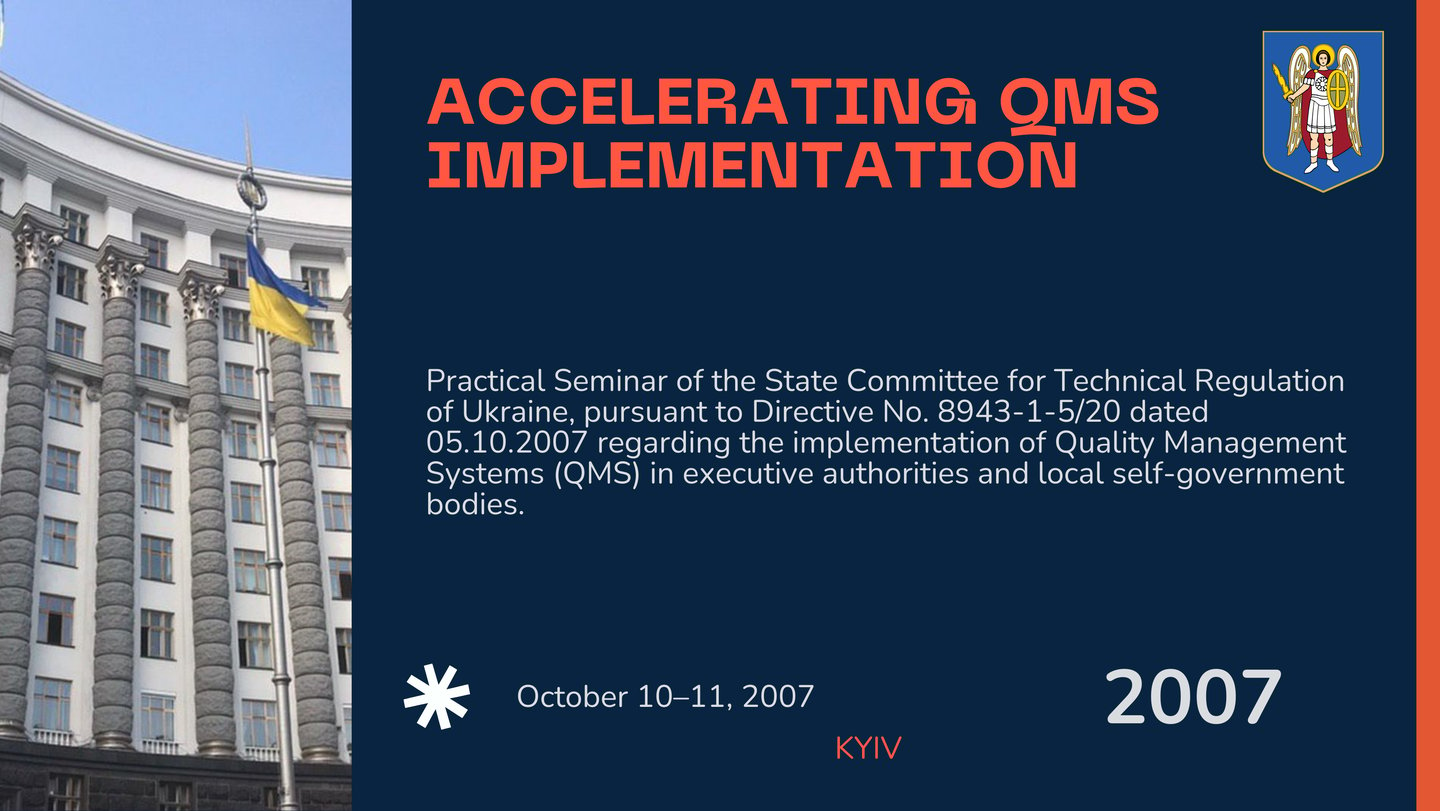
EVENT: Practical seminar of Derzhspozhyvstandard of Ukraine regarding the acceleration of QMS implementation (October 10–11, 2007).
TECHNOLOGICAL BREAKTHROUGH: Presentation of the author's "Self-Assessment Model," tested during the annual evaluation of civil servants.
DIGITAL CHRONICLES AND FACTS: Archive Documents for 2007
ARCHIVE NOTE: Documents from various periods have been digitized and are stored in the database as originals in their language of issuance. For ease of navigation, the document list is presented in the language of the website interface. Detailed historical context and instructions for content translation can be found on the individual page of each document.
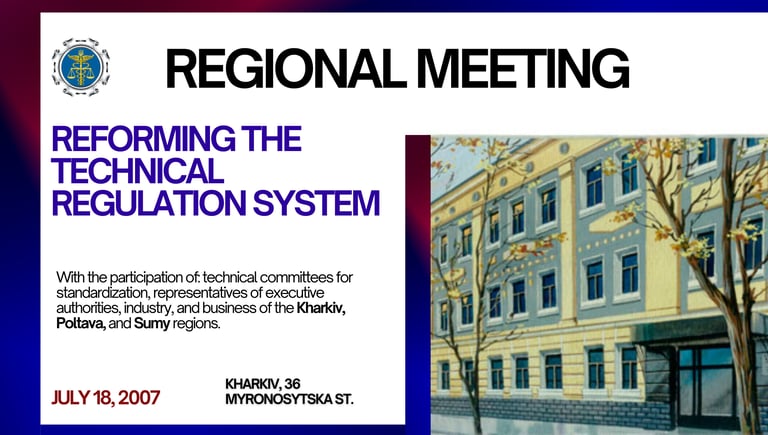
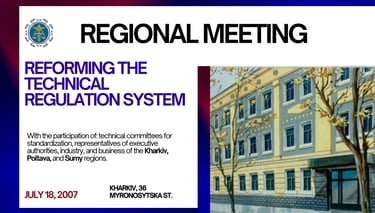
Letter from SE "UkrNDNC" No. 4832/16 dated 09.07.2007 — invitation to the meeting in Kharkiv.
Report information on the results of the meeting on July 18, 2007 (Kharkiv).
Directive of Derzhspozhyvstandard No. 8943-1-5/20 dated 05.10.2007 regarding the preparation of information materials on self-assessment.
Report information of Sumy RSA (dated 02.07.07 and 22.09.07) on the development and testing of the "Self-Assessment Model".
Expense reports and Internal memos confirming participation in events in Kharkiv and Kyiv.
Action plan of Sumy RSA (2006–2007), coordinated with Derzhspozhyvstandard, which formed the basis of the presented cases.
EXPERT CONTRIBUTION: Justification of the role of government authorities as moderators between national TCs and the real sector of the economy to increase the competitiveness of territories.
KEY THESES:
Identification of administrative acts as public services (client-centricity).
Standardization of documentation to preserve institutional memory.
Measuring the efficiency of a specialist through the quality of regulated processes, rather than quantitative correspondence indicators.
RESULT: The proposed model was recognized as a promising tool for automating control verticals in accordance with ISO 9001 requirements. This experience became the foundation for understanding that quality standards must be adaptive and anticipate technological changes. These very conclusions later formed the basis for the development of the "European Attestation Standard" (EAS) concept, designed to ensure the stability of systems even in dynamic digital environments.
2007 | European excellence: training with expert Helena Krepelkova
METHODOLOGY OF EXCELLENCE: QMS Audit and CAF Model
DIGITAL CHRONICLES AND FACTS: Archive Documents for 2007
ARCHIVE NOTE: Documents from various periods have been digitized and are stored in the database as originals in their language of issuance. For ease of navigation, the document list is presented in the language of the website interface. Detailed historical context and instructions for content translation can be found on the individual page of each document.
Invitation from SE "UkrNDNC" to participate in the international seminar of Dr. Helena Krepelkova (dated 25.10.2007).
Internal memo No. 58 on the mission to Kyiv to participate in the training (dated 06.11.2007).
Expense report No. 94, confirming attendance at the training and fulfillment of the program (November 2007).
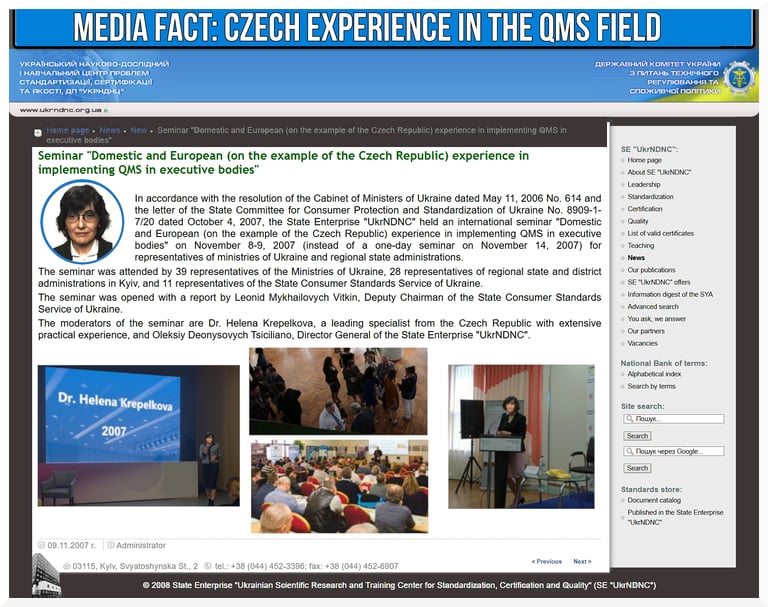
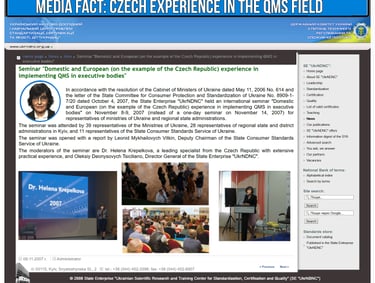
Archive news from SE "UkrNDNC" on the holding of the seminar for representatives of ministries and regional administrations (dated 09.11.2007).
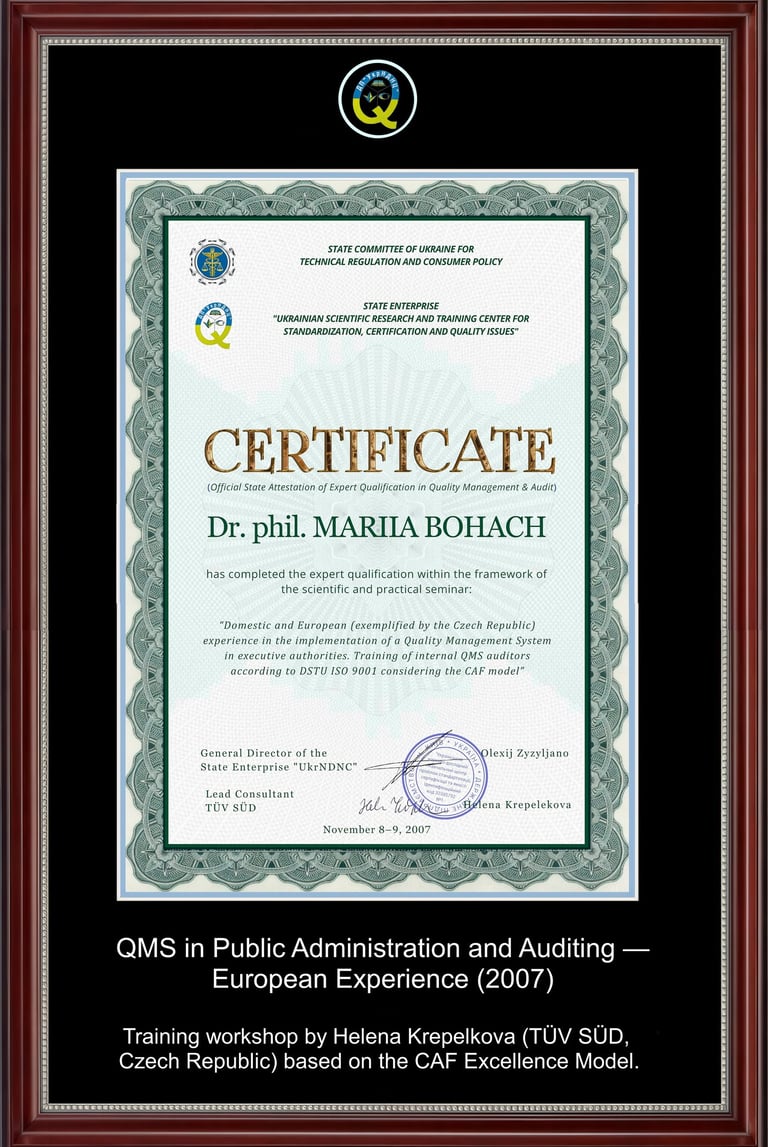
Certificate of the participant in the international seminar on QMS implementation and auditor training (Kyiv, November 8–9, 2007).
ESSENCE: Deepening knowledge of the practical application of European quality management systems. The focus was on training internal QMS auditors according to DSTU ISO 9001, taking into account the European CAF (Common Assessment Framework) model.
EXPERT CASE: Participation in the international scientific-practical seminar "Domestic and European experience (using the example of the Czech Republic) of QMS implementation in executive authorities". The training was personally led by Dr. Helena Krepelkova (Czech Republic), a leading specialist of TÜV SÜD with extensive practical experience in the EU.
ESSENCE: Obtaining official confirmation of qualification to conduct internal audits of quality management systems in state authorities according to international standards.
EXPERT CASE: The learning process included both theoretical and practical modules for the preparation of internal auditors. The official confirmation of the acquired competencies was the Certificate from SE "UkrNDNC" and TÜV SÜD, certifying the ability to conduct audits taking into account the specifics of the public sector.
SUMMARY: The presentation of the personal certificate by the General Director of SE "UkrNDNC" O. Ciciliano and Dr. H. Krepelkova marked the completion of the 2007 training cycle. This document became an important part of the professional portfolio as evidence of competence in implementing and auditing complex management systems at an international level.
VERIFICATION AND RECOGNITION: Certification of internal QMS auditors
KEY FOCUS: Direct transfer of knowledge about the specifics of the Czech model of state administration, which is considered one of the most successful examples of European integration. This allowed for the training of internal auditors ready to evaluate the effectiveness of management processes according to EU standards.
2008 | Scaling of quality systems and management efficiency audit
EVENT: 2008 became a stage of active practical implementation of developed models into the daily activities of the executive authorities of the Sumy region. The main focus shifted from theoretical planning to the creation of an effective vertical of control and preparation of the region for certification according to the ISO 9001 standard.
STRATEGIC CONTEXT: forming a new culture of public management
CONTROL AS THE CORE OF QMS: analytical supervision and system audit
A central element of work in 2008 was the transition to an in-depth analysis of the executive discipline of officials in the chain "manager — direct executor — final result". Instead of a formal check of papers, an audit system was introduced that covered 90% of local executive authorities.
Author's methodology "Control Day": assessment of the activities of officials in the chain "manager — direct executor — final result".
Expert assessment: based on the results of a large-scale analysis (Report-2008), critical points of the system were identified: absence of automated document flow and insufficient personal responsibility for processes. This became another confirmation of the need for the introduction of IT tools for management transparency.
DIGITAL CHRONICLES AND FACTS: Archive Documents for 2008
ARCHIVE NOTE: Documents from various periods have been digitized and are stored in the database as originals in their language of issuance. For ease of navigation, the document list is presented in the language of the website interface. Detailed historical context and instructions for content translation can be found on the individual page of each document.
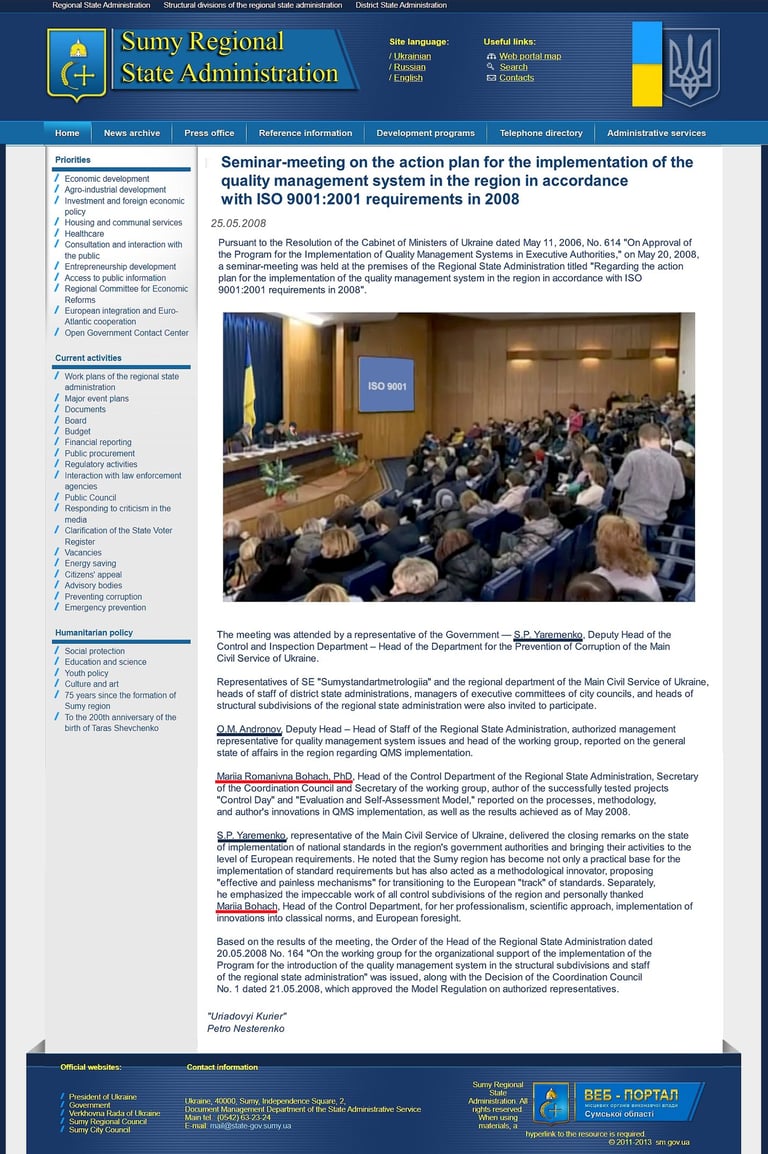
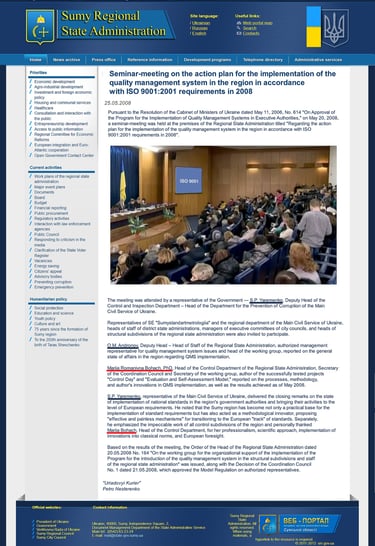
Order of the Head of the RSA No. 164 dated 20.05.2008 on the creation of the Working Group on QMS implementation.
Electronogram No. 24/1/3 dated 14.05.2008 regarding the coordination of the ISO 9001 action plan in the region.
Analytical report on the state of executive discipline (2008) — a comprehensive audit of management processes.
Report of the Sumy RSA No. 01-18/3161 dated 13.06.2008 on the implementation of the national Quality Program.
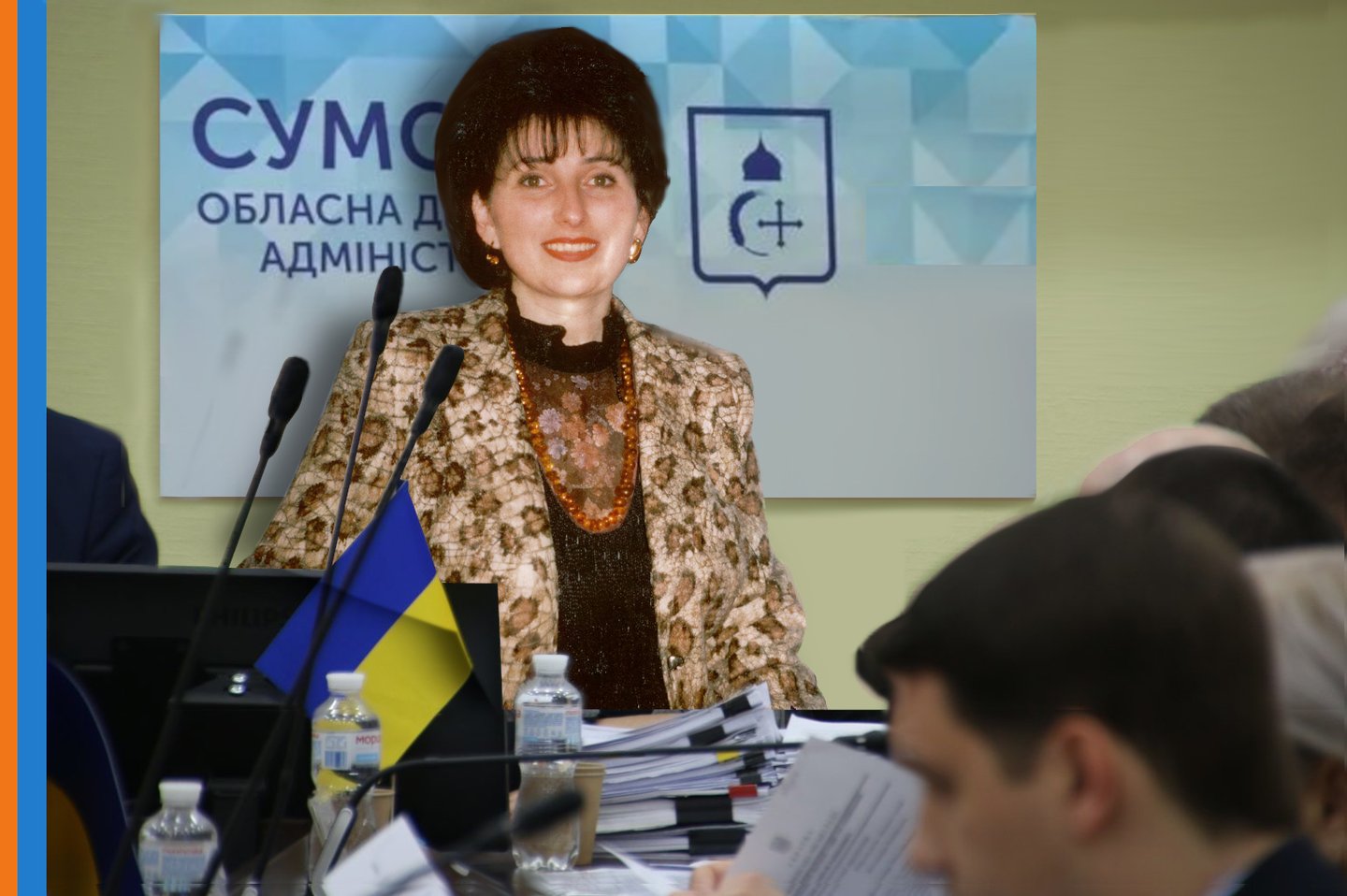
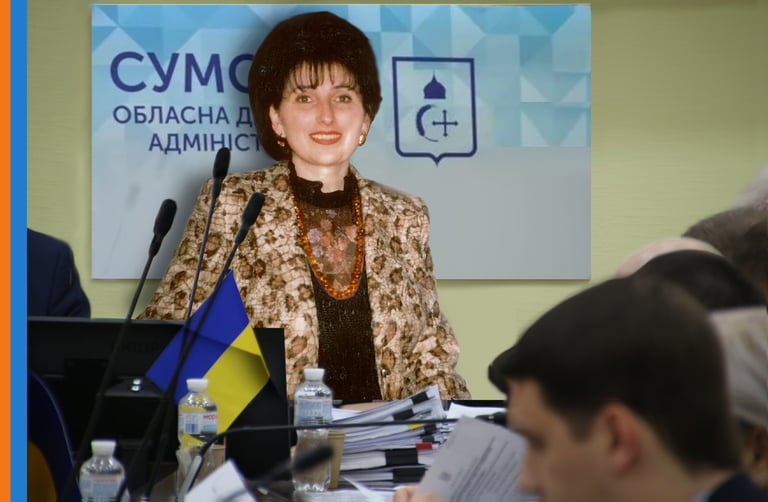
RESULT: verification of readiness for certification. According to the report on the implementation of the CMU Resolution No. 614, the region demonstrated high dynamics of QMS implementation. Preparation for certification in Okhtyrka, Shostka, and Konotop became proof that the developed standards are viable.
INSTITUTIONAL COORDINATION: creating a quality architecture
Based on the Order of the Head of the RSA No. 164, a specialized Working Group was formed, which became the main center of competence for the implementation of QMS in the region.
Role of the Secretary of the Coordination Council: ensuring methodological unity in the apparatus of the RSA, structural subdivisions, and local administrations.
Scaling of experience: conducting a series of meetings for the heads of apparatuses of district state administrations and city executive committees (May 2008) regarding the launch of a unified action plan for the implementation of quality standards. This allowed for synchronizing the work of the entire region and entering the final stage of preparation for certification.
2009 | Quality as a National Idea in the 21st Century: VI All-Ukrainian Quality Congress
STATE QUALITY POLICY: consolidating the strategic course
PARTNERS AND CO-ORGANIZERS: International, key state and public partners and specialized structures
DIGITAL CHRONICLES AND FACTS: Archive Documents for 2007
ARCHIVE NOTE: Documents from various periods have been digitized and are stored in the database as originals in their language of issuance. For ease of navigation, the document list is presented in the language of the website interface. Detailed historical context and instructions for content translation can be found on the individual page of each document.
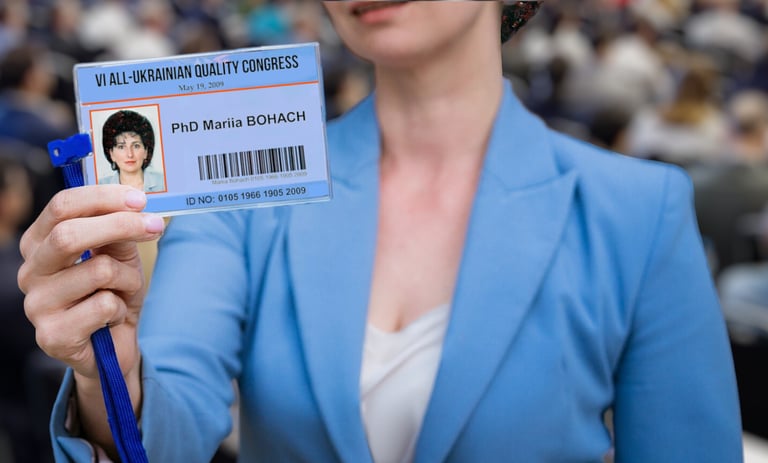

Delegate's ID (badge) of the VI All-Ukrainian Quality Congress (personalized proof of participation, 19.05.2009).
Internal memo No. 94 dated 14.05.2009 on the mission for participation in the congress.
Expense report No. 78, verifying the fulfillment of the representative mission in the capital.
Program and materials of the congress dedicated to competitiveness and human rights as a consumer.
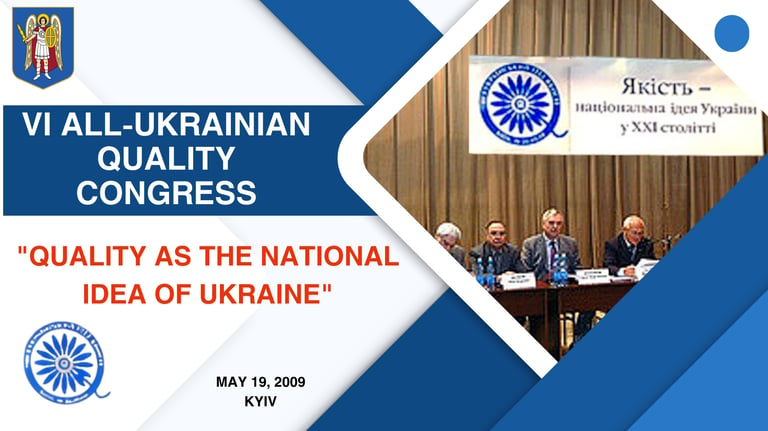
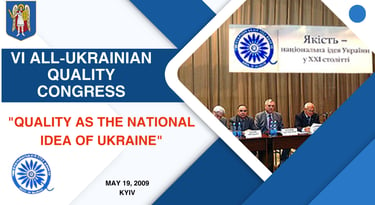
EVENT CONTEXT: VI All-Ukrainian Quality Congress (May 19, 2009, Kyiv). The forum was held under the consistent but updated motto "Quality as the National Idea of Ukraine". The organizers were the Ukrainian Association for Quality (UAQ) and the UUIE (Ukrainian Union of Industrialists and Entrepreneurs) with the support of specialized ministries.
GOAL OF THE EVENT: Discussion of social orientation and organizational excellence in the face of new economic challenges, protection of consumer rights, and product safety at the national level.
STATUS: Official delegate from the Sumy region. The possession of a personal delegate's ID (badge) confirms the authority to participate in the adoption of strategic decisions of the congress.
CONTEXT: The main event of the year in the field of public management under the slogan "Quality as the National Idea of Ukraine". The congress became a platform for determining the strategy for building a system of technical regulation for the sake of European integration in the conditions of economic turbulence of 2009.
DELEGATE MANDATE: personal participation and expert representation


EXPERT CONTRIBUTION: Participation in the work of the congress as a representative of the regional management vertical, which already had successful experience in implementing QMS. Participation in discussions on overcoming technical barriers to trade and implementing systemic approaches to quality management in government authorities.
RESULT: Participation in the 6th congress was a logical continuation of the work started at the 5th congress. Confirmation of the high level of trust from the regional leadership and national quality institutions. This highlighted the stability of the professional course and the recognition of the Sumy region as one of the leading regions in building the national quality infrastructure.
2009 | International Recognition: Transfer of Management Innovations into the European Space
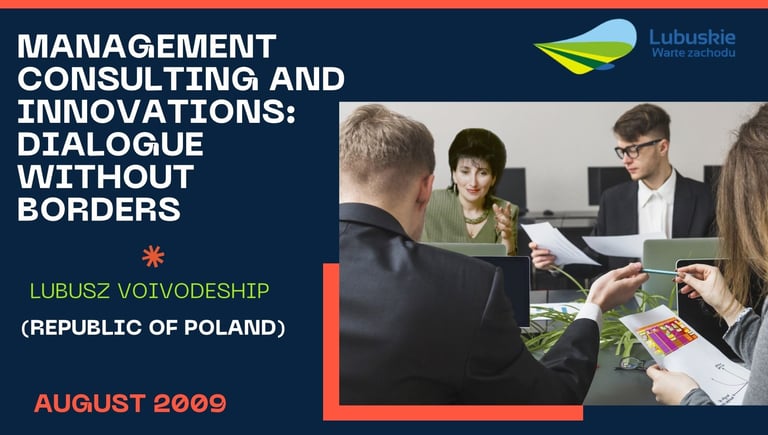
EVENT: During 2009, within the framework of an international experience exchange programme, a series of professional meetings and working visits were conducted between representatives of the administrative systems of Ukraine and the Republic of Poland.
A significant event was the visit to the Lubusz Voivodeship, during which practical aspects of public administration reform, as well as the implementation of modern control mechanisms, were discussed at the governmental level. (August 2009)
TRANSNATIONAL DIALOGUE: Ukraine – Poland (Zielona Góra)
INTEGRATION OF EXPERIENCE: From Methodology to Strategic Partnership
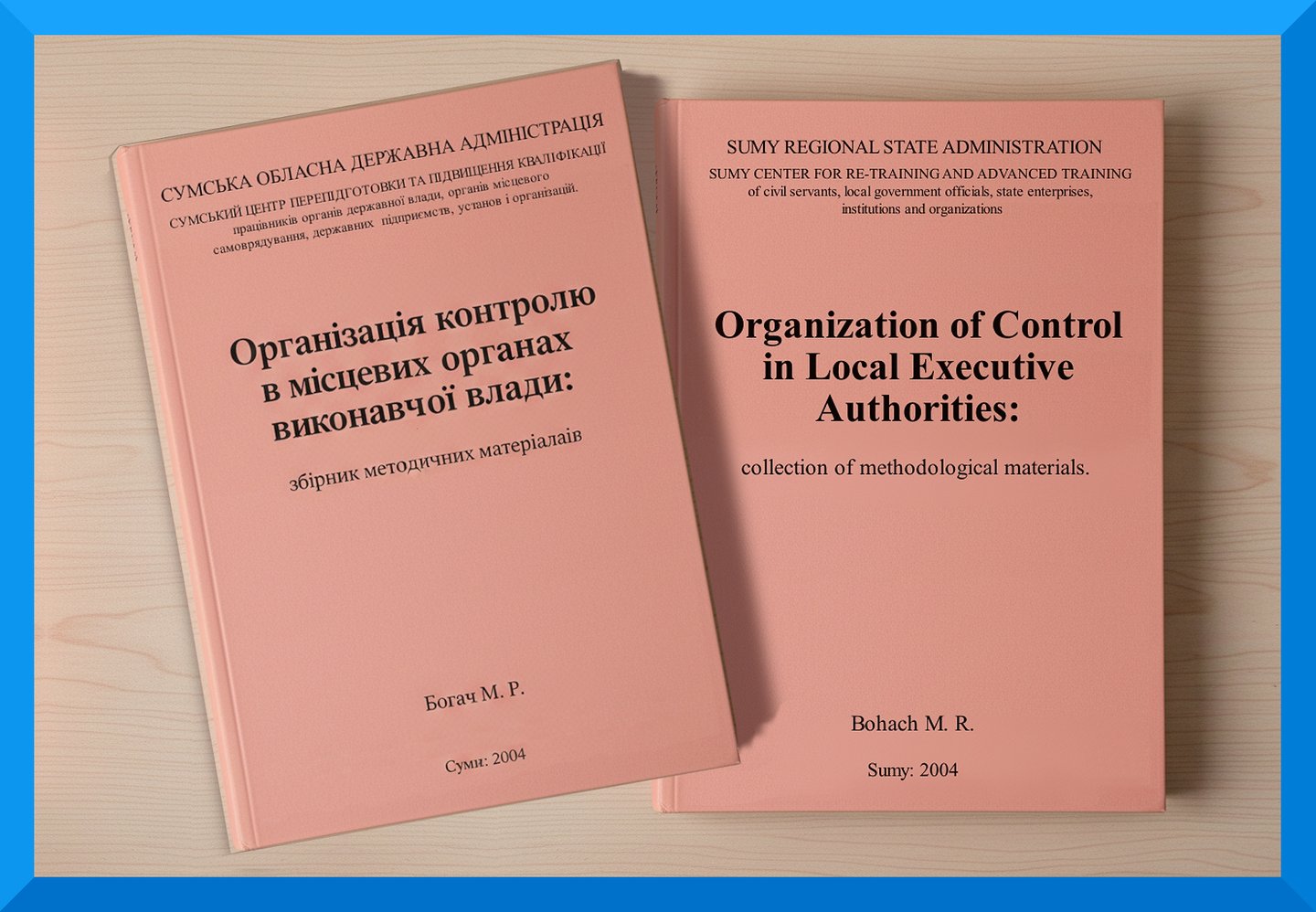
EXPERT CASE : This publication became one of the foundational building blocks for the future EAS™ standard.
The methodology developed in 2004 provided a systemic approach to organizing state control processes and transformed fragmented procedures into a clear, logically structured, and transparent methodology. It is not merely a collection of instructions, but a scientific and practical justification of the concept that an effective control system functions as a tool for development rather than an instrument of pressure. The publication was prepared bilingually (Ukrainian and English), enabling integration into the European professional space. Thus, the developed authorial methods can be considered as having clearly transcended national boundaries and contributed to the expansion of standardized approaches.
ARCHIVE NOTE: Documents from various periods have been digitized and are stored in the database as originals in their language of issuance. For ease of navigation, the document list is presented in the language of the website interface. Detailed historical context and instructions for content translation can be found on the individual page of each document.
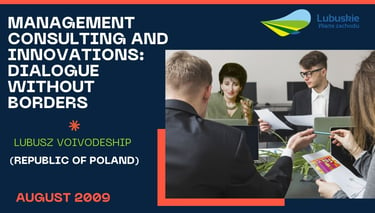

Official invitation and logistical confirmation:
Communication from the Office of the Marshal of the Lubusz Voivodeship regarding the organization of the visit and official support (transfer from Rzeszów railway station).Travel documentation:
International railway tickets confirming the travel route and duration of stay in the Republic of Poland.Electronic copy of the author’s presentation:
Materials of the professional presentation on management and control systems (identical to the printed materials used during the exchange).Media archive (web print):
Saved digital copies of publications on international experience exchange published on official platforms in 2009.
ROLE: Within the framework of official activities, Dr. Mariia Bohach represented Ukraine as a leading expert in the development of Quality Management Systems (QMS) in the public sector.
The authorial system for the improvement of administrative control presented by her generated strong interest among Polish colleagues:
The photograph captures a moment of professional discussion with representatives of профильних departments of the Voivodeship, during which specific algorithms and innovative approaches developed by the author for optimizing administrative processes were discussed.
PRESENTATION AND PROFESSIONAL EXCHANGE: The English version of the publication was personally presented to the Marshal of the Lubusz Voivodeship as an example of advanced Ukrainian methodology. Polish experts actively shared their own experience, as they were among the first in Poland to implement such systems already in 2004. This exchange became an important stage of international experience transfer and confirmed that the developed approaches in management and control are understandable, relevant, and competitive within the European context.
Additionally, the hosting side demonstrated the Quality Management System (QMS) in practical operation — through real processes in the fields of education and culture during thematic visits and official events in Zielona Góra, as evidenced by archived publications on the platform “INTERIA.”
DIGITAL CHRONICLES AND FACTS: Archive Documents for 2009
Read in the INTERIA news archive for 2009:
QUALITY DIPLOMACY: The exchange of experience formed a solid foundation for understanding shared functional standards of public institutions within a unified European space.
RESULT: European Vector and Professional Transformation: This phase of international activity became a robust bridge, organically connecting long-term administrative practice within state institutions with the beginning of a new stage of independent expert activity. Entering the European space with a multidimensional body of knowledge — as a methodologist, author of innovative projects, and public servant — confirmed the universality and viability of the developed systems.
The Polish experience became a decisive concluding factor in the formation of a comprehensive professional profile prepared for the challenges of international consulting and the scientific support of management transformation processes.
2010 | Scandinavian Vector: Vocational Education and Management Psychology
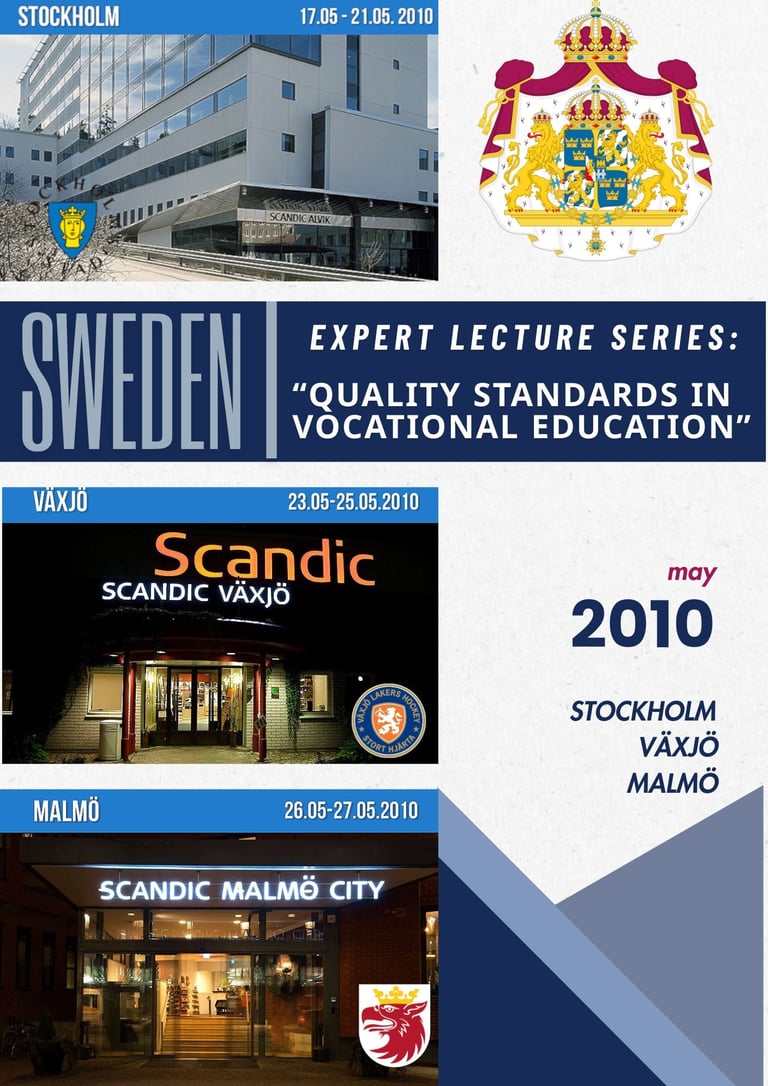
INTERNATIONAL EXPERT TOUR: Sweden (Stockholm – Växjö – Malmö)
DIGITAL CHRONICLES AND FACTS: Archive Documents for 2010
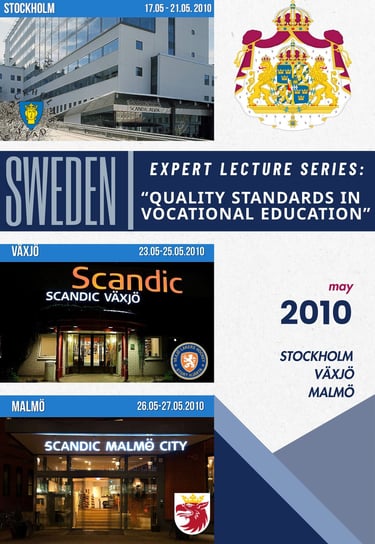
ARCHIVE NOTE: Documents from various periods have been digitized and are stored in the database as originals in their language of issuance. For ease of navigation, the document list is presented in the language of the website interface. Detailed historical context and instructions for content translation can be found on the individual page of each document.

Official invitation from NORBO KraftTeknik AB for the organisation of a seminar series in Stockholm, Växjö and Malmö (May 2010).
Event programme on the topic:
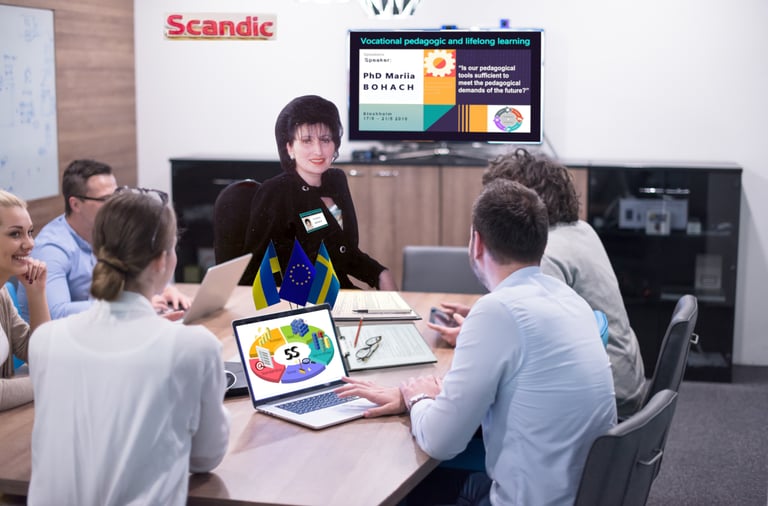
“Vocational pedagogy with a perspective on lifelong learning”.Photographic materials of working moments and official meetings in the conference facilities of the Scandic hotels.
EVENT CONTEXT: From 17 to 27 May 2010, upon the initiative of the Swedish company NORBO KraftTeknik AB, a series of specialised seminars was held in the cities of Stockholm, Växjö and Malmö — for professionals from the industrial sector as well as representatives of Swedish universities. The events took place in the conference facilities of the Scandic hotel network.
The central topic focused on the development of technical competencies of heavy industry personnel under conditions of rapid technological advancement.
STATUS: PhD Mariia Bohach — invited expert, key international speaker, and lecturer within the seminar series for representatives of Swedish industry and relevant universities.
OBJECTIVE OF THE EVENT: Development of methods for structuring knowledge transfer and for the development of workplace competencies, taking into account international standards.
DISCUSSION: PhD M. Bohach, a researcher and methodologist in the field of pedagogy and education, as well as an expert and practitioner in the field of management at the governmental level, presented tested projects for the implementation of Quality Management Systems (QMS).
An integrated approach to vocational pedagogy was presented, offering accessible and effective tools for internal quality assurance and optimisation of educational processes for the industrial sector.
The discussion was centred on the question:
Are existing pedagogical tools sufficiently effective to meet the challenges of the future?Debates were also conducted on the integration of pedagogical and psychological aspects in adult education.
Bohach’s approach emphasised the importance of lifelong learning as a strategic resource for modern industry.
PROFESSIONAL CONTRIBUTION:
In addition to her teaching activities, PhD Mariia Bohach initiated and conducted an expert audit of management systems for the hosting side (one of the Scandic hotels).EXPERT CASE:
This step demonstrated the universality of the author’s methodologies, oriented towards the implementation of international standards, as well as their effectiveness not only in the industrial sector but also in the service sector.RECOGNITION:
The high quality of the conducted audit was officially confirmed by a letter of appreciation from the hotel management, which became further evidence of international trust in the expertise of PhD Mariia Bohach.
PRACTICAL CASE: Expert Audit as an Act of Goodwill
RESULT: Synergy of Theory and Practice at the International Level.
The expert tour in Sweden in 2010 confirmed the status of PhD Mariia Bohach as an international expert capable not only of modelling and teaching complex concepts, but also of implementing real changes through audit and consulting.
This strengthened the connections between the Ukrainian academic school and leading Swedish specialists in the field of vocational education.
2010 | Switzerland: International Standards and Service Psychology
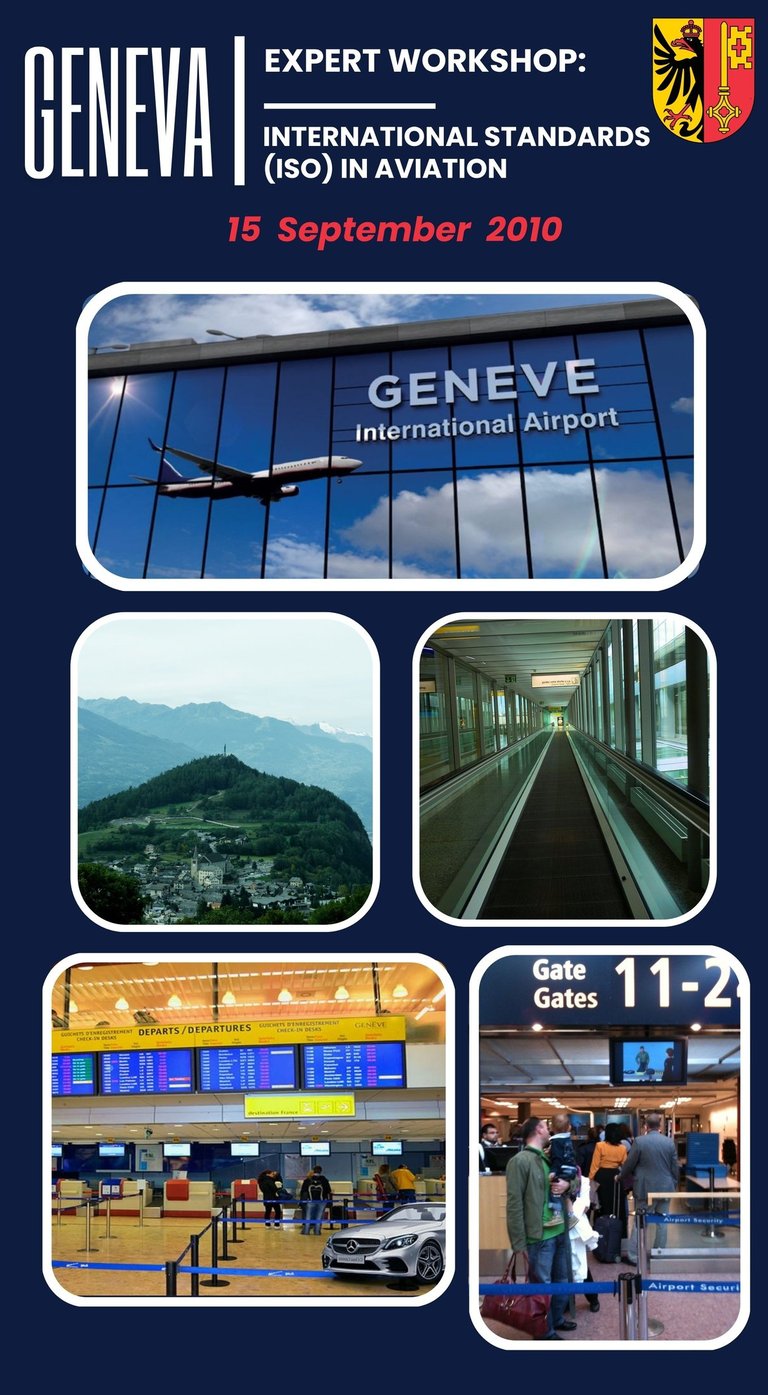
EVENT CONTEXT: In September 2010, Geneva became a platform for in-depth exploration of global standards in the aviation industry. At the conference complex of Geneva Airport (GVA), where the headquarters of IATA (International Air Transport Association) is located, a large-scale certification workshop was held. The event was organised for leading international experts with the aim of integrating quality management systems into airport operational activities. This provided a unique opportunity to examine how strict international regulations in aviation safety and efficiency intersect with flexible psychological management strategies.
STATUS: PhD Mariia Bohach — invited participant, independent expert in quality management systems (ISO), as well as a specialist in pedagogy and social psychology. Participation in an event of this level enabled the integration of fundamental knowledge of human behaviour with the practical requirements of international certification.
OBJECTIVE OF THE EVENT: In-depth exploration of the mechanisms of economic psychology through the prism of aviation service. The workshop was focused on identifying the “human factor” as a key element in shaping quality. Particular emphasis was placed on understanding how the psychological state of teams and the mental attitudes of personnel are transformed into the economic performance of an organisation and the loyalty of millions of passengers.
DISCUSSION:
The discussions developed around two strategic directions defining the functioning of modern aviation hubs:Psychology of high-quality communication:
Complex models of interaction “client–staff” in stressful airport environments were analysed, where every word influences brand perception.Socio-psychological climate:
Methods for building a “healthy team” and the psychology of decision-making were discussed, which is critical for preventing errors and ensuring uninterrupted operation of complex systems.
EXPERT WORKSHOP IN GENEVA: Quality and Human Factor (IATA Training Center)
PRACTICAL CASE: Service Standards in the Management of Aviation Hubs
Based on the example of Geneva Airport (GVA), the practical application of standards was analysed:
Quality of ground handling:
comprehensive assessment of all process stages — from immediate check-in to premium service in VIP areas — through the lens of customer experience and economic efficiency.Human factor and optimisation:
implementation of psychological tools into team operations significantly increases efficiency and reduces risks associated with fatigue or miscommunication within teams.
ORGANISERS AND PARTNERS OF THE EVENT: International institutions, industry associations, and specialised organisations shaping global standards of quality and safety.


RESULT: Participation in the seminar became a significant stage of professional transformation. This enabled PhD Mariia Bohach to integrate knowledge from pedagogy and social psychology into the high-tech field of aviation, strengthening it with aspects of economic psychology.
The acquired experience confirmed that authorial quality management methodologies, previously tested in Poland and Sweden, are universal and maximally effective in dynamic sectors such as aviation, hospitality, and global communication.






2013 | Italy: Venetian Case and Innovative Format of a “Hybrid Audit”
PRACTICAL MODULE: Optimization of Material Technologies in Hotel Service (Venice)
DIGITAL CHRONICLES AND FACTS: Archive Documents for 2013
ARCHIVE NOTE: Documents from various periods have been digitized and are stored in the database as originals in their language of issuance. For ease of navigation, the document list is presented in the language of the website interface. Detailed historical context and instructions for content translation can be found on the individual page of each document.
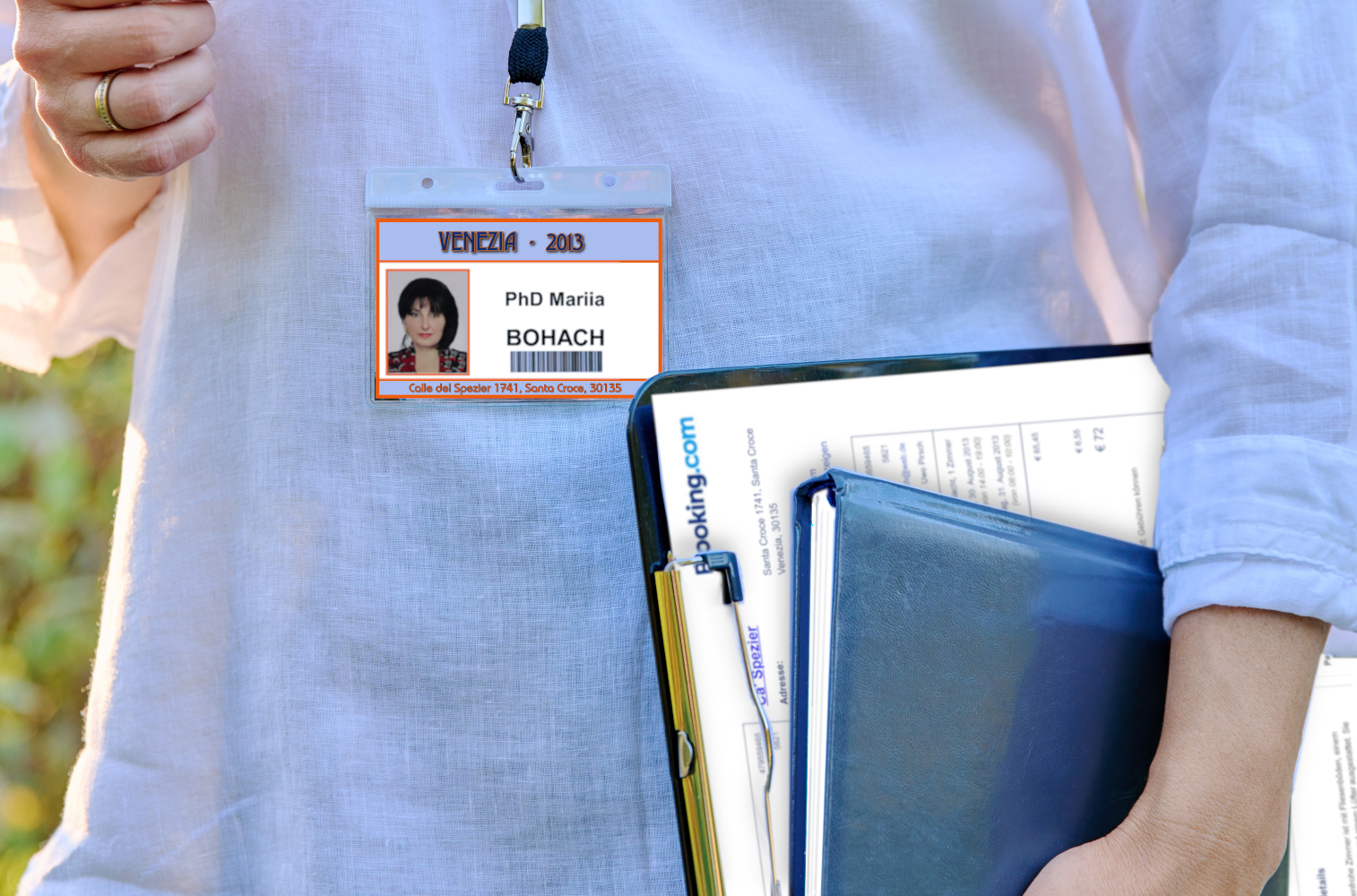
Booking Confirmation: Documentary confirmation of reservation and stay.
On-site Photo Documentation: Archival photographic documentation of facilities and operational processes.
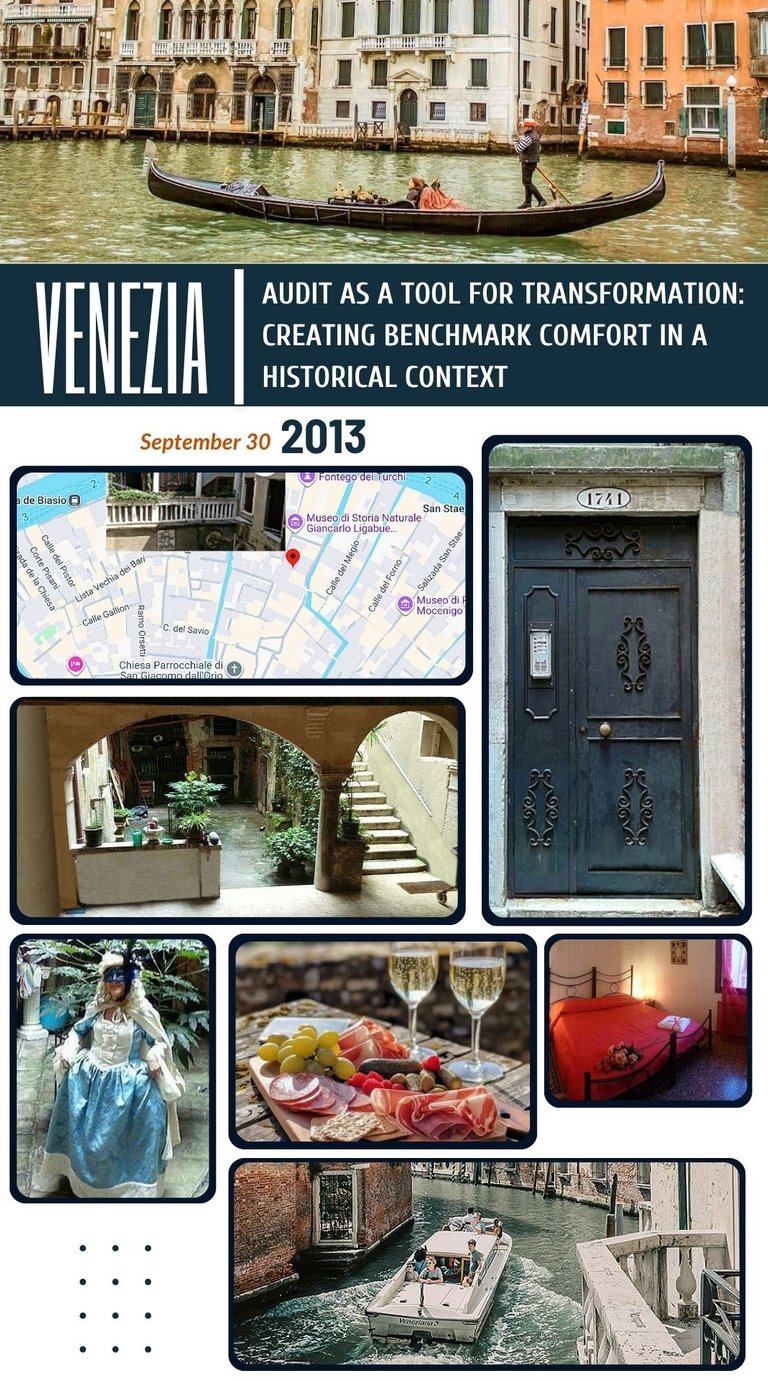
CONTEXT AND OBJECT: In August 2013, a comprehensive audit of a small hospitality business, Ca’ Spezier Guest House in Venice (Santa Croce district), was conducted. This was the first experience of a “hybrid audit”: intensive 24-hour on-site work combined with subsequent long-term remote-based support (Calle del Spezier 1741, Santa Croce, 30135 Venezia).
STATUS: PhD Mariia Bohach — invited independent expert and auditor in the field of quality management system (QMS) implementation.
OBJECTIVE OF THE AUDIT: Transformation of a historical space through the synergy of material authenticity and modern service standards.
The objective was to bring every interior detail and every stage of guest service to the level of a “visiting card of Venice.” The creation of a unique environment where the aesthetics of historical minimalism becomes a gateway for the traveler seeking not just accommodation, but full immersion into the atmosphere of Italian culture and refined historical heritage.
COMPLEX LOGISTICS AND DAILY OPERATIONS:
Within the conditions of a complex urban topology, the audit focused on developing a new system of informational guidance and everyday guest support.To ensure error-free navigation, a two-component logistics model was implemented:
The first component included clearly structured arrival routes (from the guest’s location to door No. 1741), as well as departure logistics, covering various transport options (railway and bus stations, airports), and optimized routes for guests traveling by private transport.
The second component included hypothetically necessary service points: bicycle rental, local shops, pharmacies, medical facilities, and contact details of services across Italy.
This ensured guest confidence and comfortable orientation even in the absence of stable digital connectivity.
OVERCOMING THE LANGUAGE BARRIER: As part of the implementation, a German- and English-Italian mini phrasebook was developed for international guests.
A list of 50 key phrases and essential locations within the hotel and the city enabled effective communication with staff and confident navigation in public spaces.
SERVICE PROTOCOL AND AESTHETICS: The analysis of the hotel’s material base enabled the integration of modern service standards with the unique historical atmosphere of the property. The implemented room preparation standards were based on preserving authentic elements — from restored Venetian ceramics to forged interior details reflecting classical eras. Each spatial element was reinterpreted to transform the stay in a historic building into a holistic aesthetic experience, where service functionality enhances the dignity of the historical environment.
METHODOLOGICAL MODULE: Psychology of Hospitality and Cultural Context
INTERACTION AND RESULTS: Direct dialogue with the team and analysis of operational processes made it possible to identify hidden service inefficiencies previously overlooked by the owners. This enabled management to gain a deeper understanding of how to enhance service standards.
Official feedback from management on the transformation results is available in the REFERENCES section.
RESULT – FROM HYBRID FORMAT TO EAS: The Venetian case of 2013 became a transitional milestone that demonstrated the effectiveness of remote-based consulting models. This experience formed the foundation of the modern EAS system, which today provides professional online audits and international digital certification.
“READY SOLUTIONS” STRATEGY:
The audit was aimed at ensuring maximum ease of access to all leisure opportunities for the guest.Comprehensive “offer maps” were developed for each guest. This approach enabled an analysis of the cultural ecosystem surrounding the hotel: from the Grand Canal (750 m) to Campo San Giacomo dell’Orio and the Natural History Museum. Additionally, relevant theatre programs, carnival events, and gondola services were incorporated, transforming the hotel into a space where all organizational details are pre-arranged for the guest.
GASTRONOMIC ETIQUETTE:
The development of recommendations for local gastronomic experiences emphasized the authenticity of Venetian daily life. Each decision was based on the psychology of comfort (meeting the needs of a modern traveler within a historical environment) and on the principle that a hotel represents the “face of the country,” where service shapes the overall perception of Italy..
2014 | Austria: First Experience in Remote Consulting and Compliance
CONTEXT AND OBJECT: In 2014, a project was implemented as a professional voluntary initiative within an international expert community, aimed at the full legalization of a private medical-oriented practice in accordance with Austrian legislation (WKO). Support was provided to a young foreign specialist (massage therapist) who was attempting to integrate into Austrian society and found himself in a complex legal situation. This initiative became a prototype for one of the future online product formats of the EAS system.
OBJECTIVE OF THE AUDIT: Transformation of an informal private practice into a legally compliant business entity within the Austrian legal framework. The task included full legal and operational support through remote audit and mentoring mechanisms.
STATUS: PhD Mariia Bohach — independent expert in quality management systems (ISO), auditor, methodologist, and practitioner with international experience.
LEGAL SUPPORT: Development of a step-by-step algorithm for the official registration of self-employment in Bad Gastein.
This included analysis of local legislation, preparation of the required documentation package, and advisory support to prevent sanctions.
REMOTE CONTROL: Implementation of an online monitoring system covering all stages of business establishment. Through digital communication channels (Facebook/Skype/email), operational control of compliance with Austrian regulatory requirements was ensured.
SAFETY AND RISKS: Formation of a “safety framework” for foreigners: from clarification of tax obligations to ethical interaction with public authorities.
MODULE: Online Audit and Legalization of Business Activity (Bad Gastein)
MODULE: Operational Management and Professional Integration
For launching a private business in Austria, directly connected with health and human well-being, a complete system of processes within the Austrian legal framework was developed, along with practical operational algorithms:
BUSINESS PROTOCOLS: Development of basic standards for working with clients in accordance with European norms of hygiene, confidentiality, and professional ethics.
MENTORING AND SOCIAL INTEGRATION: This case demonstrated that intellectual support and professional audit can be effective even in a remote format. Support in business legalization became a key factor in the social integration of a specialist in a new country.
REGULATORY ENVIRONMENT AND INTERACTION: Institutional framework for business legalization, language integration, and social consulting
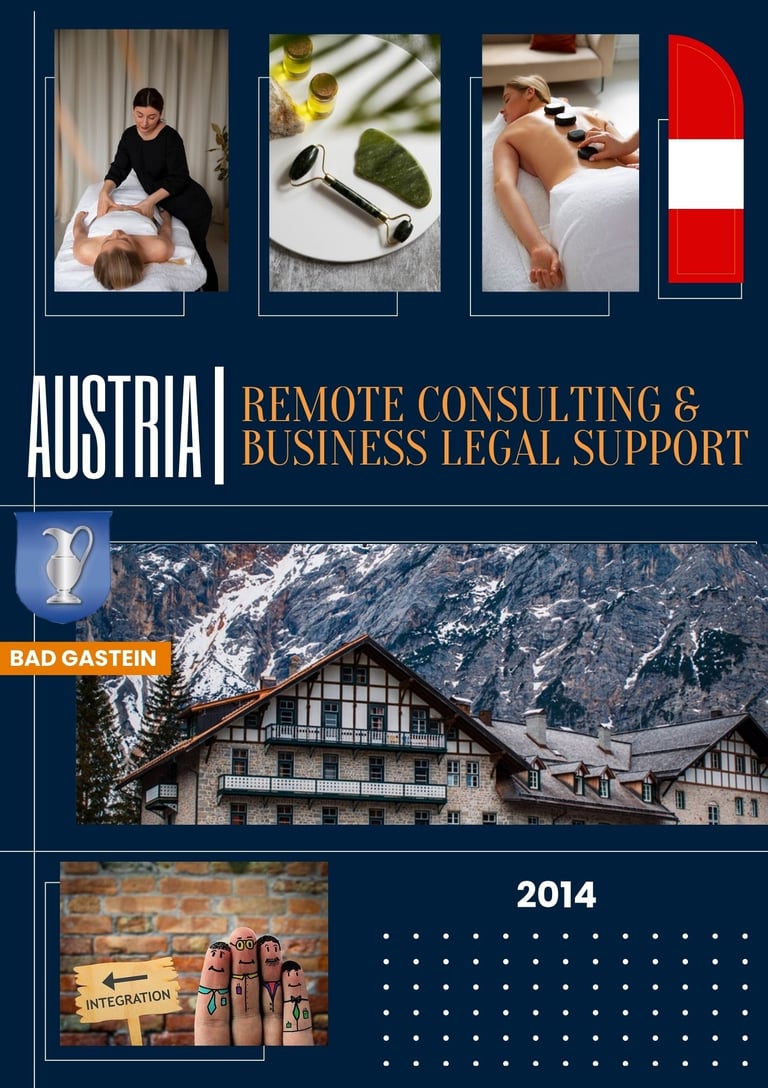
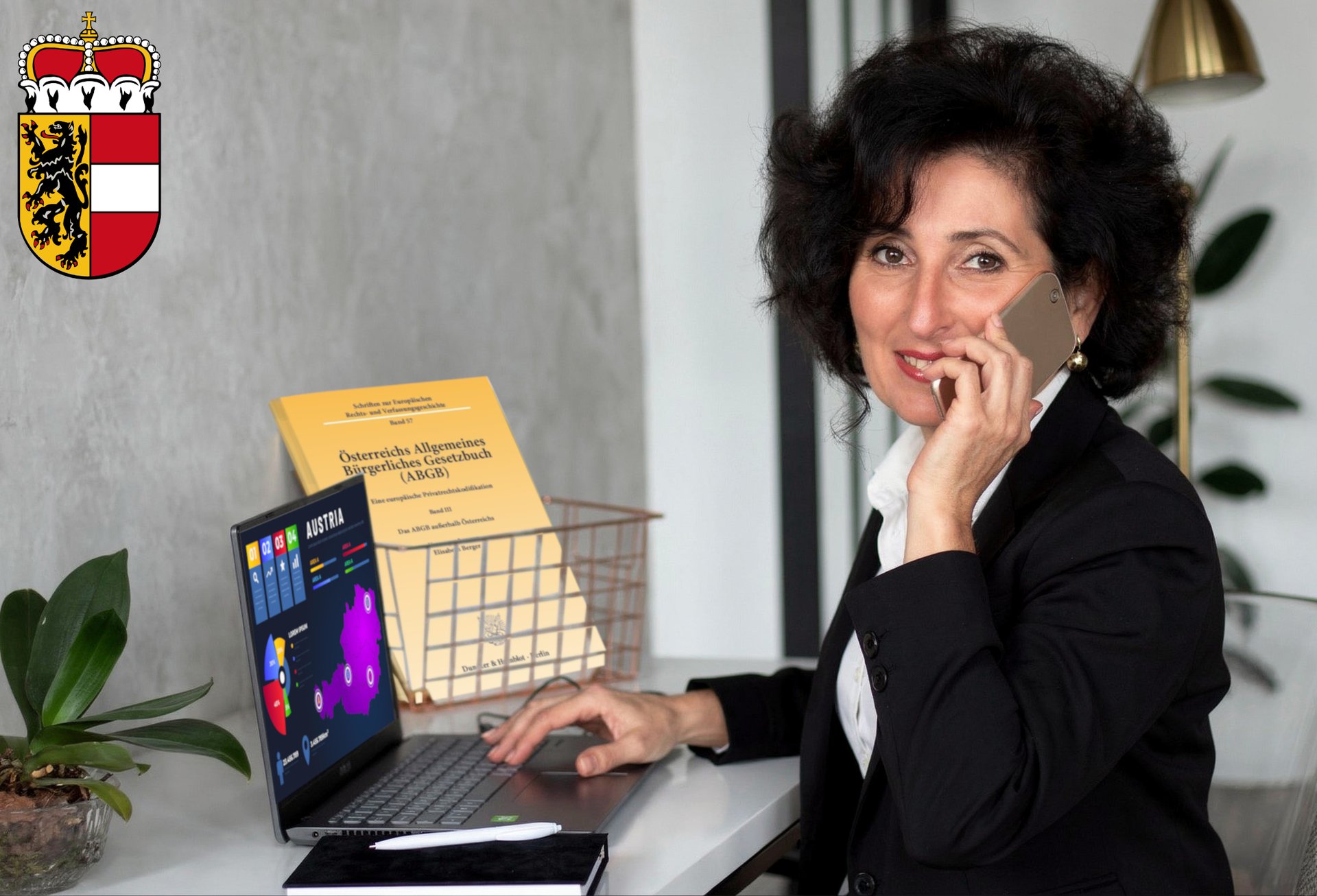
RESULT: Successful launch of a legal private massage therapy practice by a foreign national holding a temporary residence permit and work authorization, undergoing active integration into Austrian society. For PhD Mariia Bohach, this case became not only an important milestone in professional audit transformation, but also expanded the scope of her activities and confirmed the relevance of the developed QMS methodology across different contexts and sectors. This experience became another foundational element for the development of modern digital certification tools currently used within the EAS system.


Start your EAS attestation journey now.
Step into the ranks of successful European companies. The first step towards your audit is easier than you think — online, verifiable, flexible, and without hidden costs. Start your transformation now and become the number one in your market.


Your place next to the market leaders awaits.
CONTACTS


Moosbach,
Germany, 92709
ADDRESS
© 2026 European Attestation Standard (EAS). All rights reserved.
FOR OUR INTERNATIONAL PARTNERS:
Our website is available in German, Ukrainian, English, and Italian. To support our cooperation, we provide official EAS documents and attestation materials upon request, not only in these languages but also in any other required language by agreement.